7 days Rural Camp
Report on the Rural Study Camp
Venue: Don Bosco Vidyakshetra, Prakashpalya, Chikkaluru GP, KollegalaTq.
Duration: 14th April 2026 to 20th April 2026
The Department of Postgraduate Studies and Research in Social Work, St. Philomena’s College, organised a Rural Study Camp from 14th to 20th April 2026 at Prakashpalya, Chikkaluru GP, KollegalaTq.. The primary objective of the camp was to provide students with a first-hand understanding of rural and tribal life, enabling them to engage directly with communities and gain practical insights into grassroots-level social work.
The Department of Post Graduate Studies and Research in Social Work, St. Philomena’s College, has organised a Rural Study Camp from 14 to 20 April 2026 at Don Bosco VidhyakshetraPrakashpalya, KollegalaTq. The primary objective of the camp was the practical learning of Social work done in the class, understanding of rural life, enabling them to engage directly with communities and gain practical insights into grassroots-level social work.
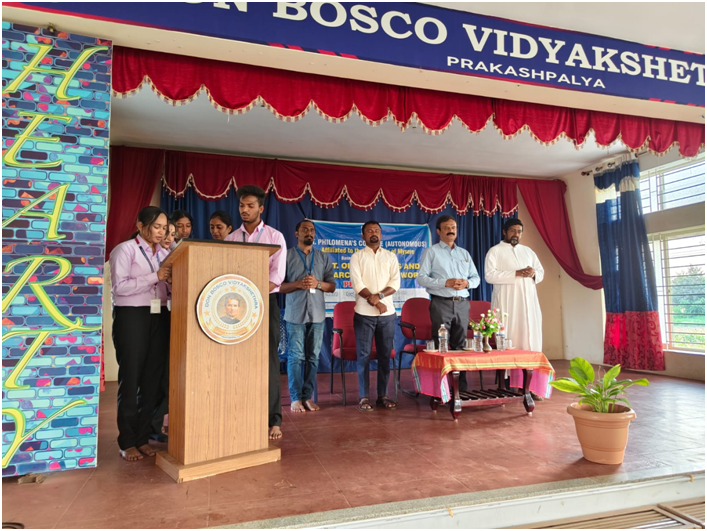
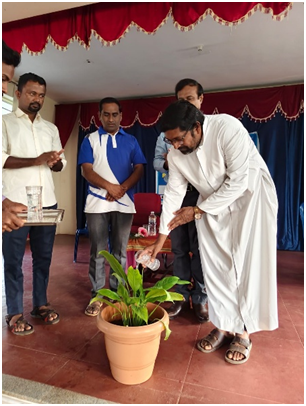
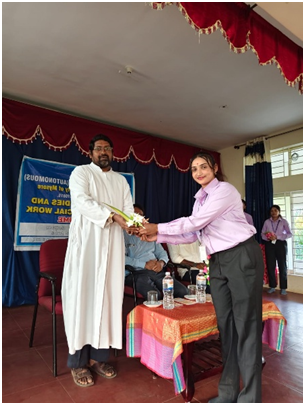
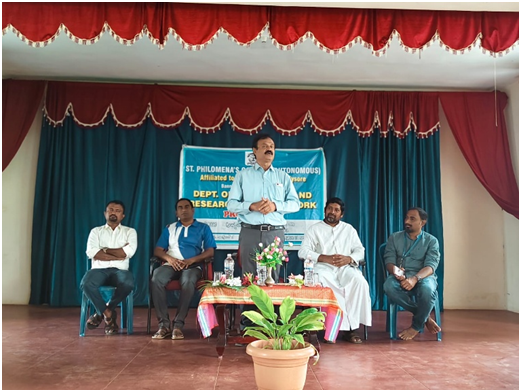
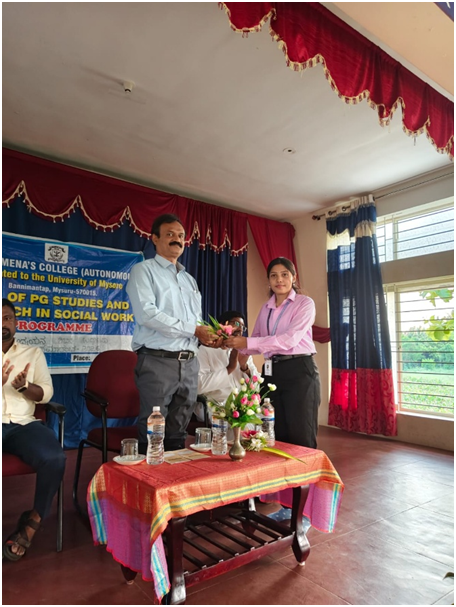
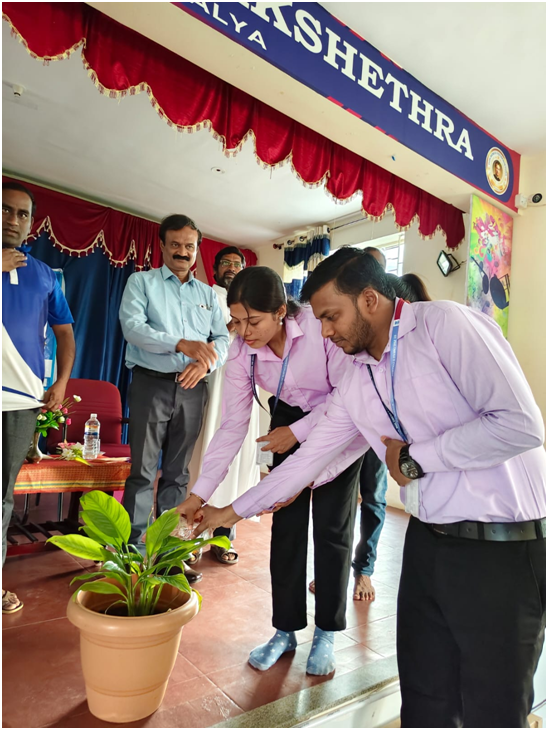
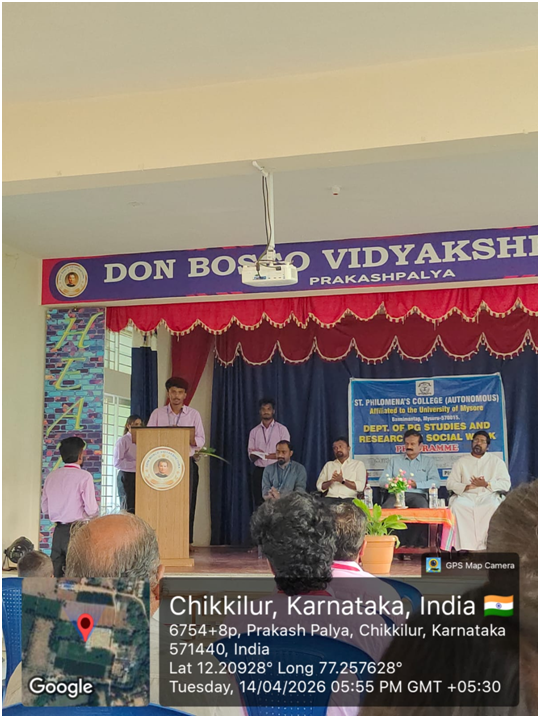
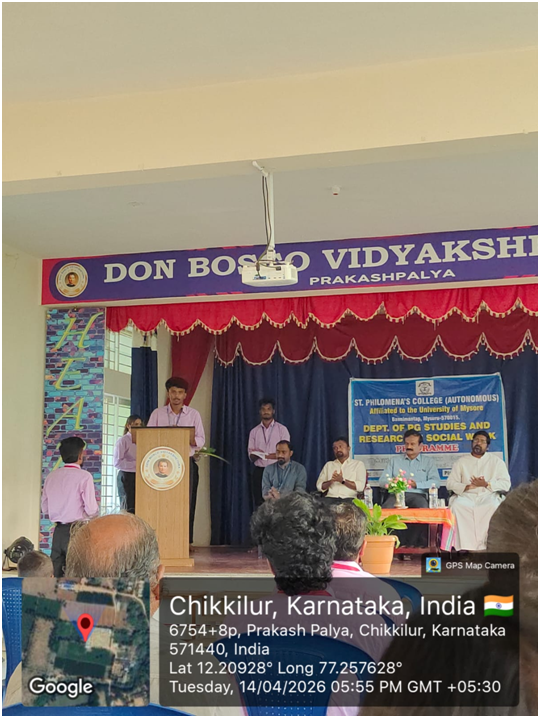
The inaugural ceremony of the camp was held at the Don Bosco VidhyaksethraPrakashpalya on 14-04-2026. The event witnessed the presence of several dignitaries, including our Chief guest, Vice Rector and Parish Priest Father Cyril Sagayraj, SDB, Vice Principal of Don Bosco Vidhyaksthra School Mr. Nagendra, Principal of St. Phillominas College, Dr. Ravi JD Saldana, Mr. Mathew, Assistant Professor of BSW at St. Phillomena’s College and Camp Director Dr. Robin K.J., The villagers and First-year MSW students also actively participated in the programme.
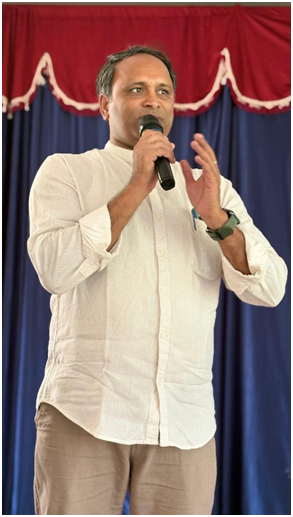
The keynote address was delivered by The Camp Director Dr. Robin K. J, who emphasised that the camp offers a significant opportunity for MSW students to immerse themselves in rural settings, fostering experiential learning. He highlighted the value of camp’s importance and learning understanding of rural community life by living among the people and learning from their lived experiences.
Rector Father Cyril Sagayaraj addressed the gathering, underscoring the importance of practical education in social work. He encouraged the students by speaking about his MSW life experiences. He also highlighted his efforts in helping dropout students by guiding and supporting them to continue their education.
The Principal Dr. Ravi JD Saldana addressed the gathering by appreciating the well-organised inauguration programme and the overall preparation of the camp. He also explained the difference between NSS Camp and MSW camp, helping students understand their unique purpose and roles, and he motivated the students to successfully complete the camp by being disciplined.
Assistant professor of BSW, Mr. Mathew, highlighted the importance of coordination by sharing his own experiences. He explained that effective coordination and teamwork are essential for the success of any camp or social work activity. Through his examples, he encouraged students to work together, communicate well, and support each other to achieve common goals successfully.
As a part of the 7-day social work camp, students will be engaging in various community-based activities to understand and learn about rural life. Students will be organising cultural programs, street plays and jathas to create awareness on social issues. Students will also conduct games for children to encourage participation and enjoyment. Additionally, we take part in rallies (jatha) to spread social messages and do social mapping to study community needs. This camp helps us gain practical experience and develop social responsibility.
The Master of Ceremonies for the inaugural programme was Manoj G . The event began with a prayer by the Manasa team, followed by a welcome speech delivered by Ravi Kumar. The vote of thanks was proposed by Sindhu C, expressing gratitude to all dignitaries, participants, and supporting organisations for their contribution to the success of the inaugural event.
The camp promises to be a transformative experience for the students, offering them a deeper understanding of rural realities and the role of social work in community development.
Day 2 Report: Rural Study Camp
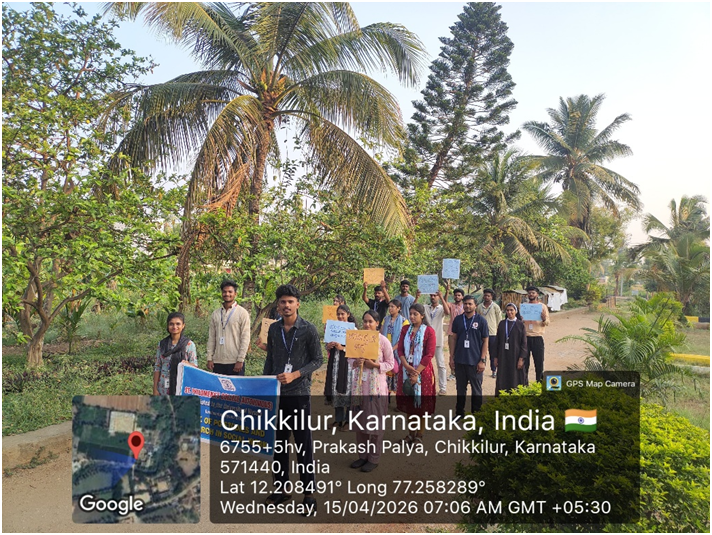
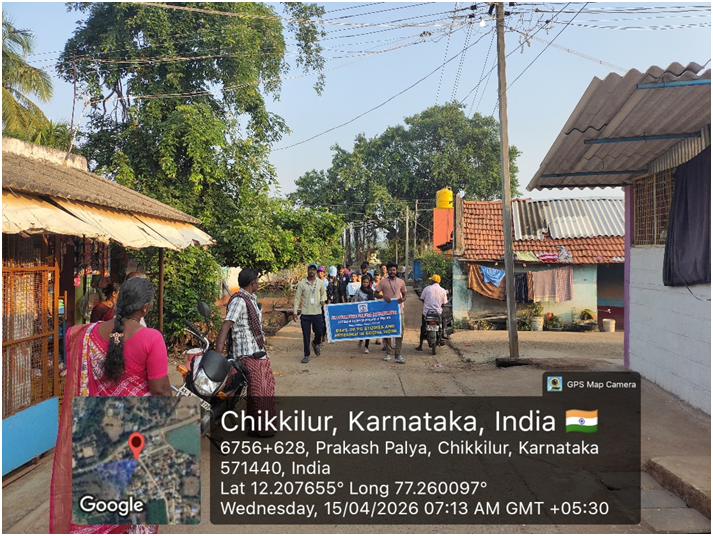
The second day of the Rural Study Camp began with a morning prayer, followed by an exercise session that set a reflective and energetic tone for the day. Subsequently, the MSW trainees organised a jatha (awareness rally), during which they raised slogans and displayed placards highlighting the importance of education, environmental conservation, awareness about alcoholism, and health.
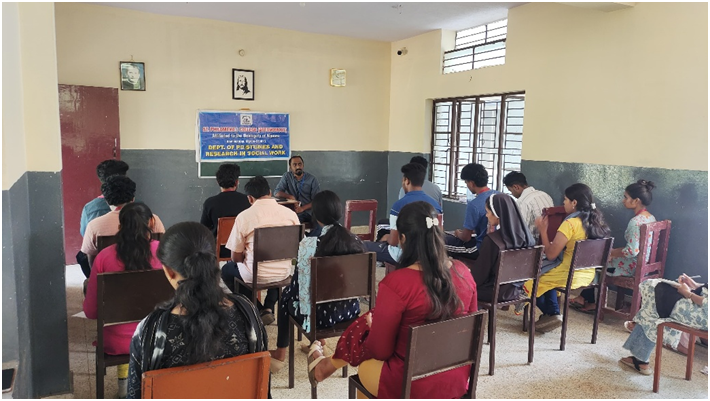
After the rally, all participants gathered in the community hall for an academic session on Participatory Rural Appraisal (PRA), conducted by Dr. Robin K. J. Assistant Professor and Camp Director. In this comprehensive session, he explained the history and evolution of PRA and elaborated on various tools and techniques, including village mapping, transect walks, seasonal calendars, timelines, Venn diagrams, ranking and scoring methods, and problem tree analysis. He also introduced survey methodologies and distributed structured questionnaires to facilitate household-level data collection.
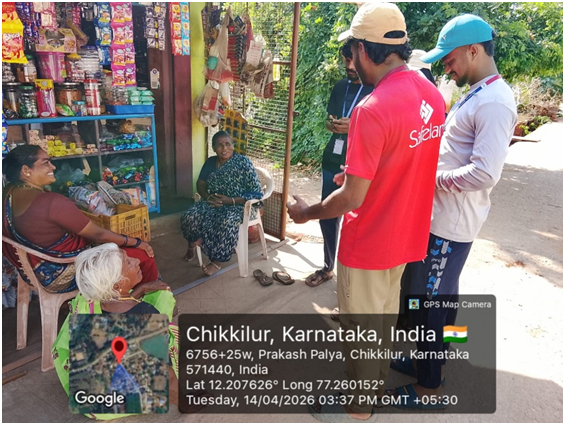
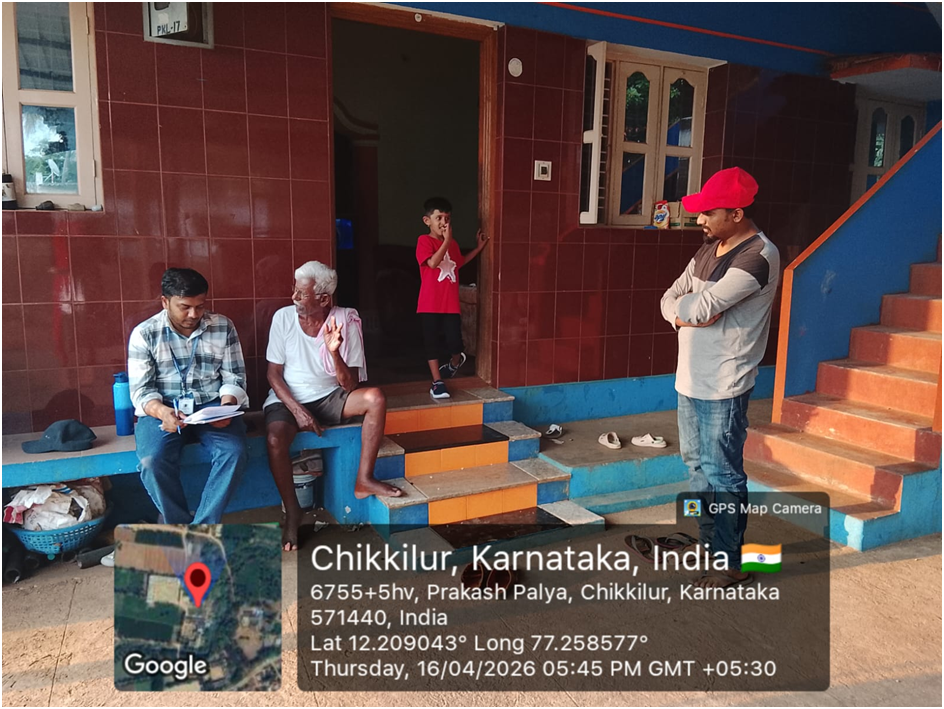
Following the session, the trainees actively interacted with village families and conducted surveys to better understand the community’s needs, available resources, and the challenges they face.
Later, the students practised a skit on mobile awareness and rehearsed a song using karaoke, along with a dance performance, in preparation for the evening cultural program.
The day concluded with a vibrant cultural event, where MSW trainees performed a street play to create awareness about the excessive use of mobile phones. The performances were well received by the community and proved to be an effective medium for social messaging.
The day ended with a reflective evaluation session, during which students shared their experiences, learning outcomes, and areas for improvement.
Day 3 Report: Rural Study Camp
The Third day of the Rural Study Camp began with a morning prayer, followed by an exercise session that set a reflective and energetic tone for the day.
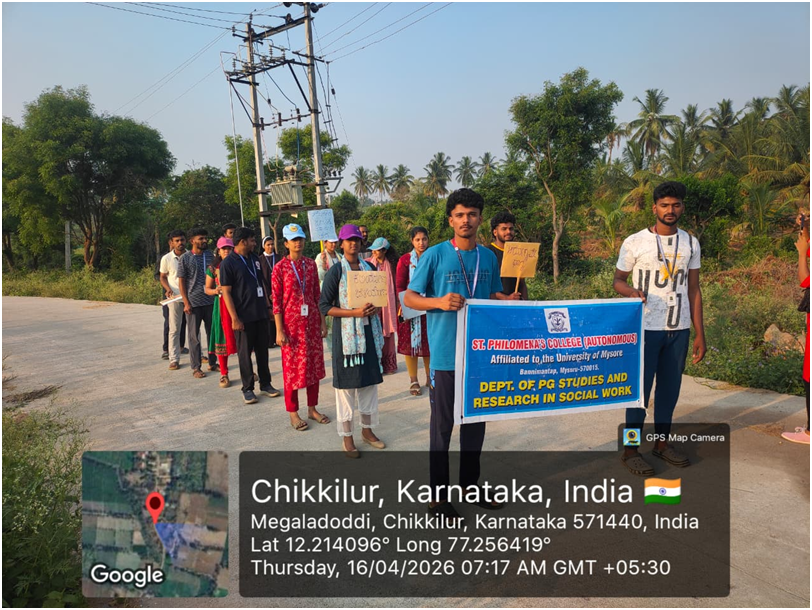
Subsequently, the MSW trainees organised a jatha (awareness rally) in Megaldoddi Village, during which they raised slogans and displayed placards highlighting the importance of education, environmental conservation, awareness about alcoholism, and health.
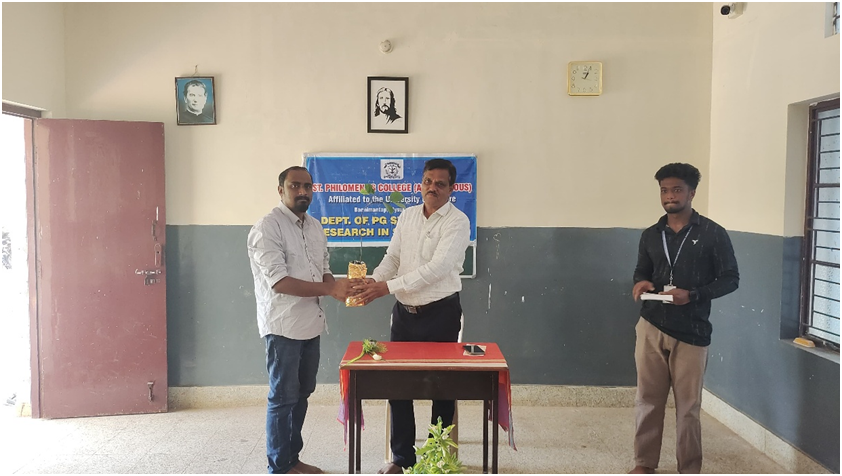
After the rally, all participants gathered in the community hall for an academic session by the PDO Panchayat Development Officer, conducted by Mr. Shivakumar, the PDO (Panchayat Development Officer) of the Chikkaluru Panchayat. He explained the structure, functions, and responsibilities of the Panchayati Raj system at the village level. The Gram Panchayat plays a key role in local governance and development, ensuring the implementation of government schemes and addressing the needs of rural people. The officer highlighted that the Panchayat is responsible for basic amenities such as sanitation, drinking water, road maintenance, waste management, and street lighting. It also undertakes welfare activities, including support for housing schemes, pension distribution, and employment programs like the cancellation of MGNREGA, yet to be launched, Vikasit Bharat.
Further, the PDO discussed the financial aspects of the Panchayat, stating that funds are received from government grants, taxes, and other sources, which are utilised for village development works. The importance of proper record-keeping, transparency, and public participation in decision-making was emphasised. The role of elected members, including the President and Ward Members, was explained in ensuring democratic functioning. Overall, the session provided a comprehensive understanding of how the Panchayat system works to promote rural development and improve the quality of life in the village.
Following the session, the trainees actively interacted with village families and conducted surveys (PRA Practical) to better understand the community’s needs, available resources, and the challenges they face.
Afternoon HOD and PG Coordinator Dr. Noor Mubasheer C A, Fr. David Sagayaraj- Asst. to Rector, Mrs. Shirley Anthony, Asst. Professor of PG Social Work and Mr. Roshan, Asst Professor of MCA, visited the camp and interacted with students.
Later, the students practised for a dance performance and rehearsed a song using karaoke, in preparation for the evening cultural program and awareness program, which was performed in the Megaldoddi Village later in the evening.
The day ended with a reflective evaluation session during which students shared their experiences, learning outcomes, and areas for improvement
Day 4 Report: Rural Study Camp
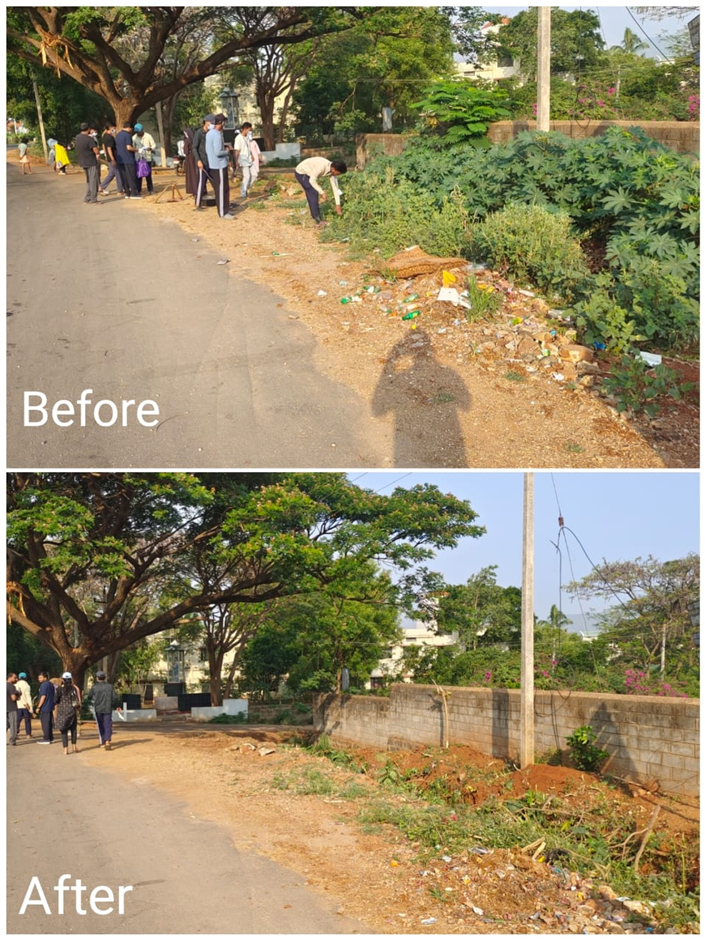
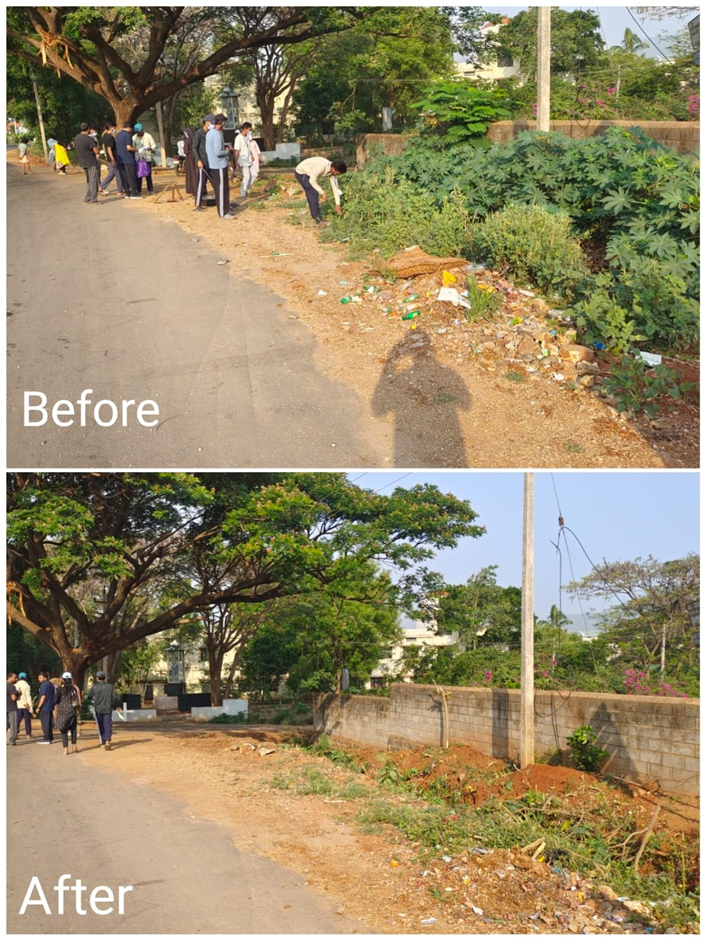
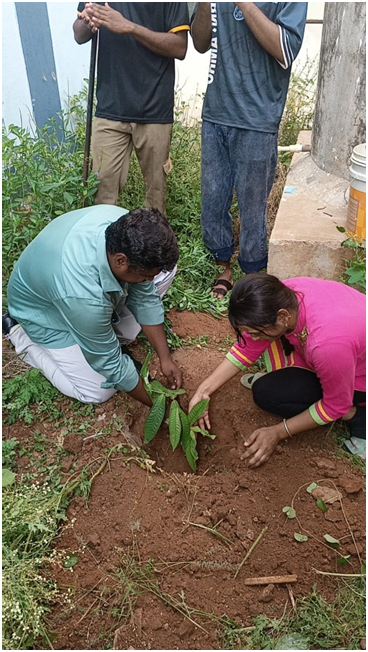
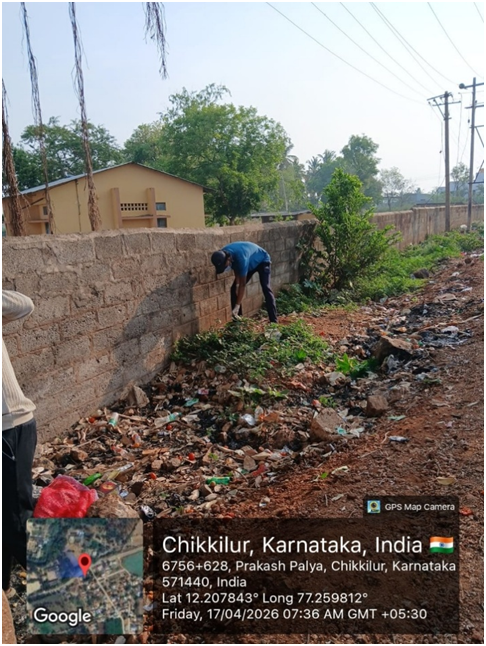
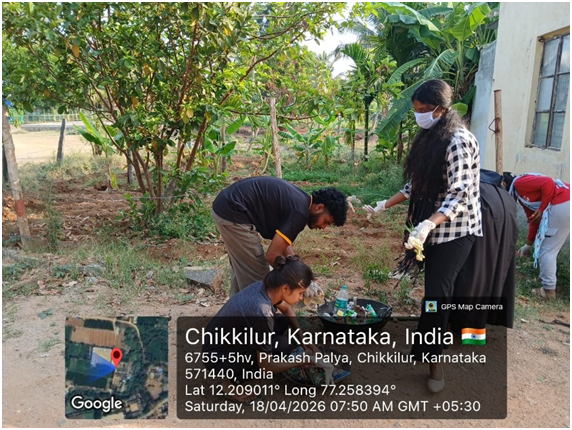
The Fourth day began with a refreshing morning exercise that energised all the trainees for the day ahead. Following this, the trainees actively participated in shramadhan at Prakash Palya village, contributing to community service with great enthusiasm and teamwork. As part of their commitment to environmental sustainability, they also planted trees, promoting awareness about the importance of protecting nature.
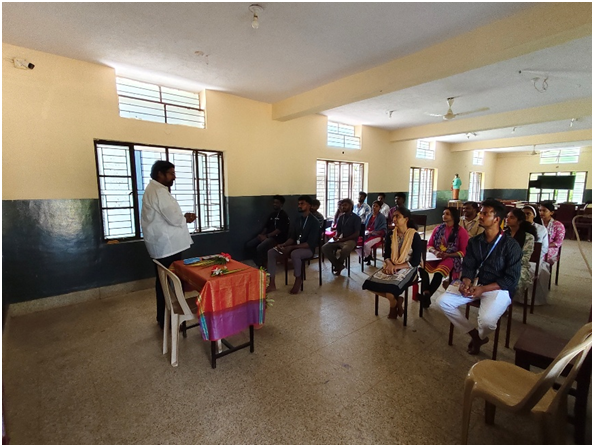
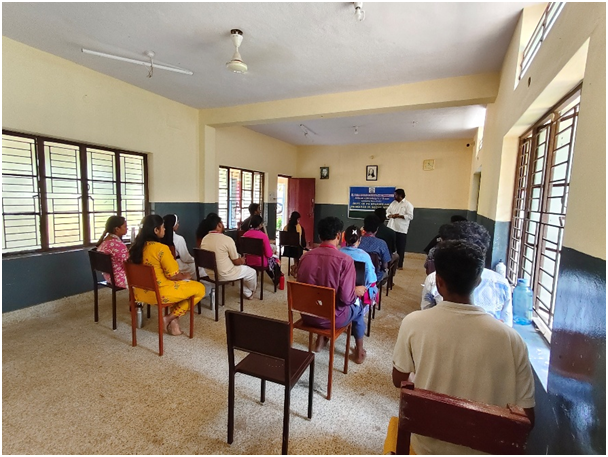
Later in the day, the trainees attended an informative and meaningful session on child protection conducted by Fr. Cyril Sagayaraj. The session created awareness about child rights, the Child Protection Committee (CPC), and the Juvenile Justice (JJ) Act.
It emphasised that every child has fundamental rights such as survival, development, protection, and participation, and highlighted the need for proper education, healthcare, and equal opportunities for all children. Special attention was given to protecting children from abuse, neglect, and exploitation, and ensuring their overall well-being.
The role of CPC in safeguarding children at the community level and the importance of the JJ Act in focusing on rehabilitation rather than punishment were clearly explained. The session also shed light on real issues like poverty, lack of awareness, and child neglect, stressing the need for community involvement and government support.
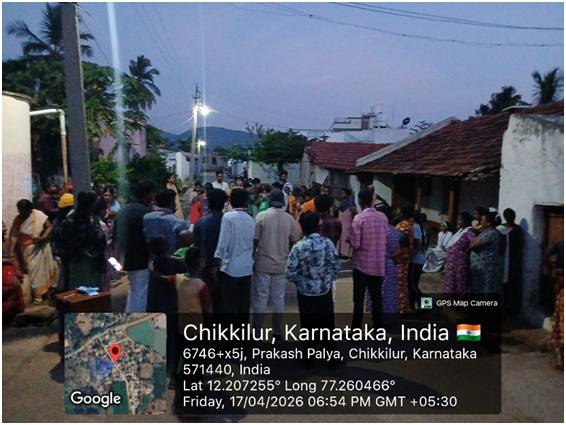
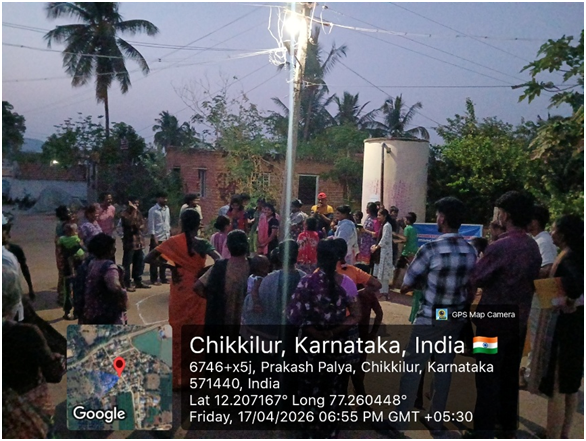
In the afternoon, the trainees prepared and practised a street on alcoholism and mobile addiction awareness, along with songs and dance performances for the evening program.
Later, they successfully presented their performances in the village, effectively spreading awareness and engaging the community.
The day concluded with an evaluation session, allowing the trainees to reflect on their learning and experiences, making it a productive and fulfilling day of the camp.
Day 5 Report: Rural Study Camp
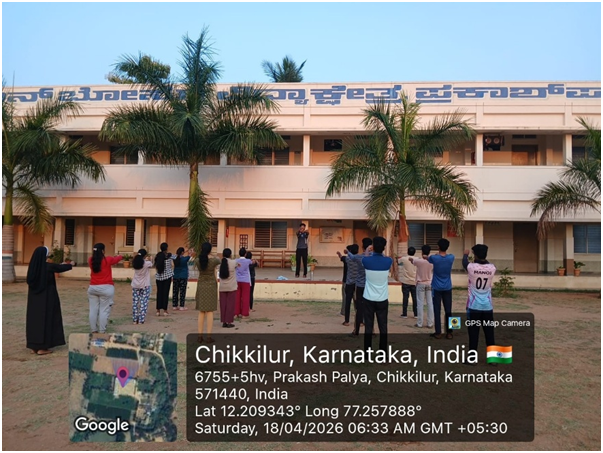
Day 5 of the Rural Study Camp began with morning exercise, helping trainees start the day with energy and discipline. After this, the trainees participated in Shramadhan, which encouraged teamwork and a sense of responsibility toward the community.
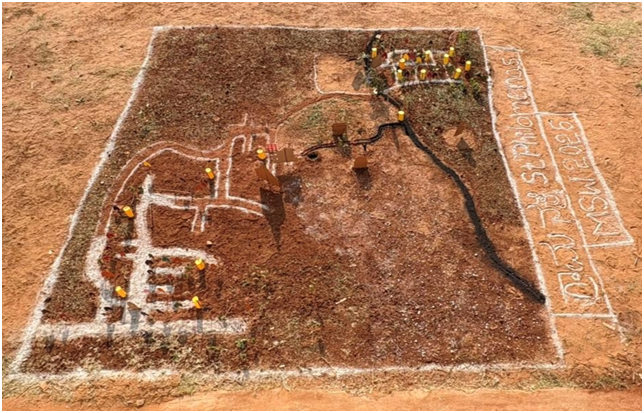
Following Shramadhan, the trainees went for Village Mapping as a part of PRA practical to Prakaspalya and Megaladoddi. This activity helped them understand the structure, resources, and living conditions of the villages.
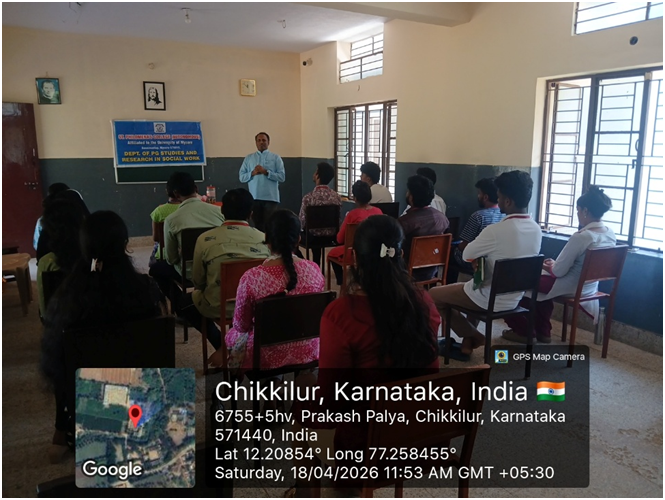
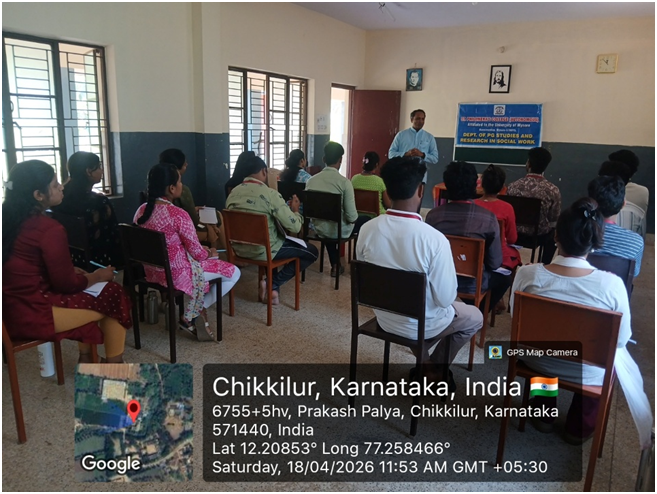
Later, the trainees attended an informative session conducted by Rector Father Lorence, SDB on the topic “Communication for social work practice”. In his session, he explained the importance of discipline and effective communication in social work. He also engaged the trainees by asking them to answer a questionnaire he had prepared. To make the session more interactive, he conducted games focused on active listening and observation skills.
After the session, the trainees continued their work on Village Mapping by creating models and structuring their findings. This helped them present their observations in a clear and organized way.
Towards the end of the day, the trainees prepared for a street play on alcoholism, session on importance of education for children and games,which is scheduled for the next day’s program. They practiced and planned to spread awareness through this activity.
Overall, Day 5 was productive and engaging, combining physical activity, fieldwork, learning, and creative preparation.
Day 6 Report: Rural Study Camp
On the sixth day of the Rural Study Camp, the trainees began their morning with physical exercise, which helped them stay active and energised for the day ahead. This was followed by Shramadan, during which they contributed to cleaning and improving the surroundings near the village church, promoting a sense of community service.
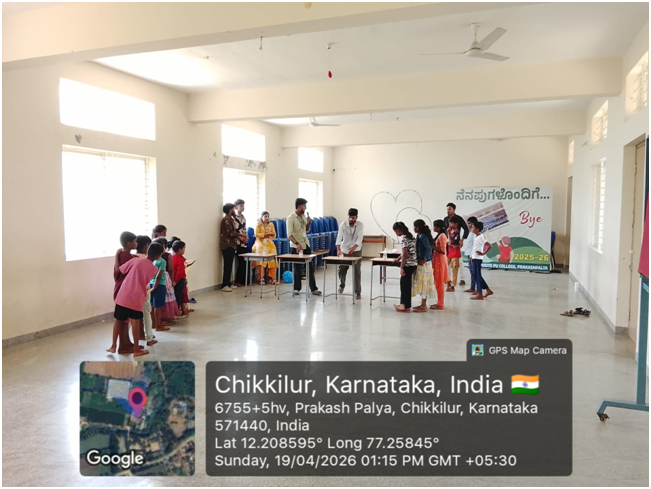
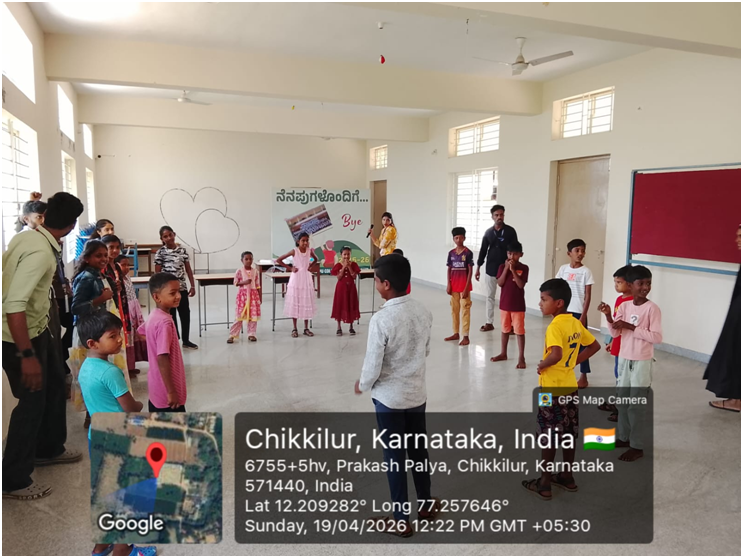
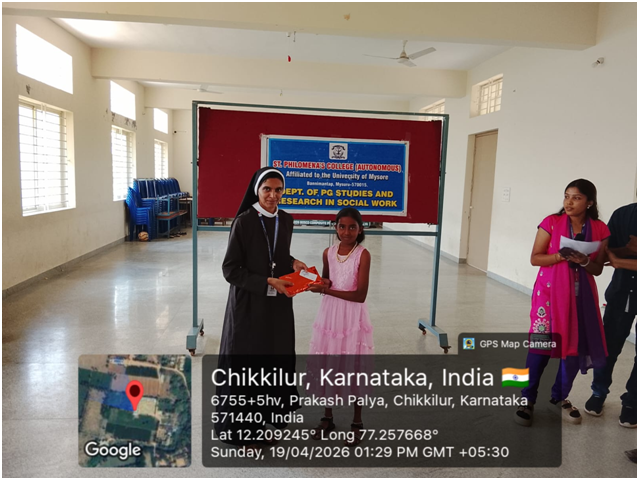
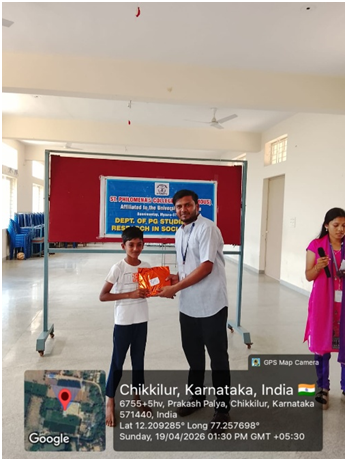
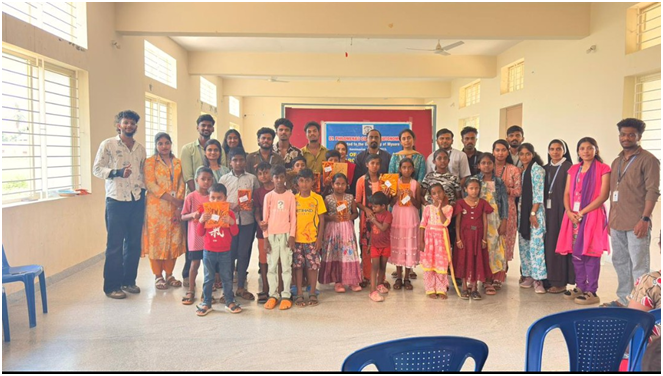
Later, the trainees organised a special program for children from the Gram Panchayat. The event included games and entertainment activities that brought joy and excitement to the children. An awareness session on the importance of education was conducted by Fr. Jhon Fernandis, a first-year MSW student, along with Dr. Robin KJ. The trainees actively interacted with the children, making the session engaging and meaningful. At the end of the program, prizes were distributed to the winners of various activities.
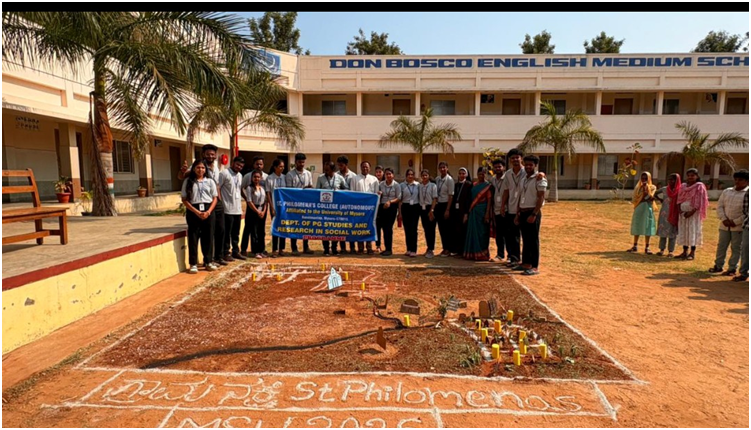
After completing the children’s program, the trainees focused on village mapping. They carefully studied and mapped the layout of the two villages, Prakashpalya and Megaladodi. Based on their observations, they created a detailed and creative floor map that clearly represented the key features and structure of both villages.
Overall, the sixth day was productive and enriching, combining physical activity, community service, interaction with children, and hands-on learning through village mapping. The day concluded with an evaluation session and campfire, during which all trainees shared their experiences and reflections from the camp.
Day 7 Report: Rural Study Camp
The seventh day of the Rural Study Camp began with the usual morning exercise, energising all the trainees for the day ahead. Following this, the trainees actively engaged in the preparations for the valedictory programme, ensuring that all arrangements were in place.
The valedictory programme was conducted smoothly, with Suhana serving as the Master of Ceremonies. The welcome address was delivered by Fr. John Fernandis, who warmly welcomed the gathering. Yathishwar and Harshitha from the first year MSW shared their opinions, and Alex read the 07-day camp report. The chief guest for the occasion was Rev. Fr. Lawrance SDB, who wished all the students well, and he also appreciated the students for their dedication and hard work.
Before the vote of thanks, a felicitation ceremony was held in honour of the Rector, Rev. Fr. Lorence, as a gesture of gratitude and respect. The vote of thanks was then delivered by Dr. Robin K J, who expressed appreciation to all those who contributed to the success of the camp.
After the formal programme, everyone proceeded to observe the Village Mapping work carried out by the trainees. The participants also took photographs to document their efforts and experiences.
The day concluded on a positive note, marking the successful completion of the Rural Study Camp activities.