“Raising Capital and Managing Finance for Start-Ups”
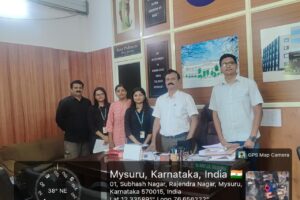
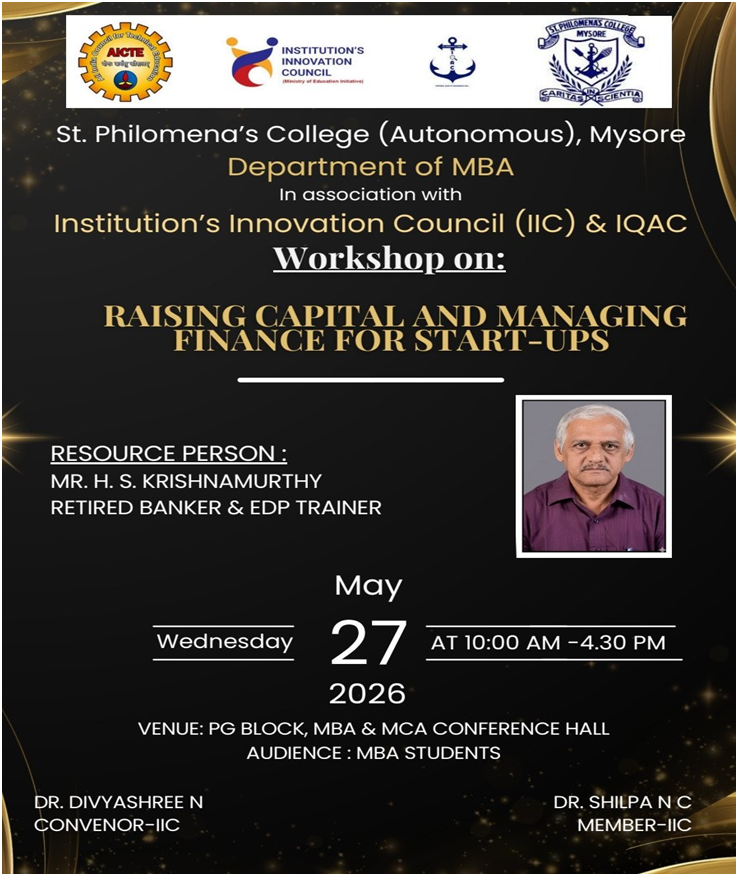
The Department of MBA, St. Philomena’s College (Autonomous), Mysore, in association with the Institution’s Innovation Council (IIC) and IQAC, organized a one-day workshop on “Raising Capital and Managing Finance for Start-Ups” on 27 May 2026 for MBA students. The workshop was conducted with the aim of providing practical exposure to entrepreneurship, business finance, and financial management.
Introduction
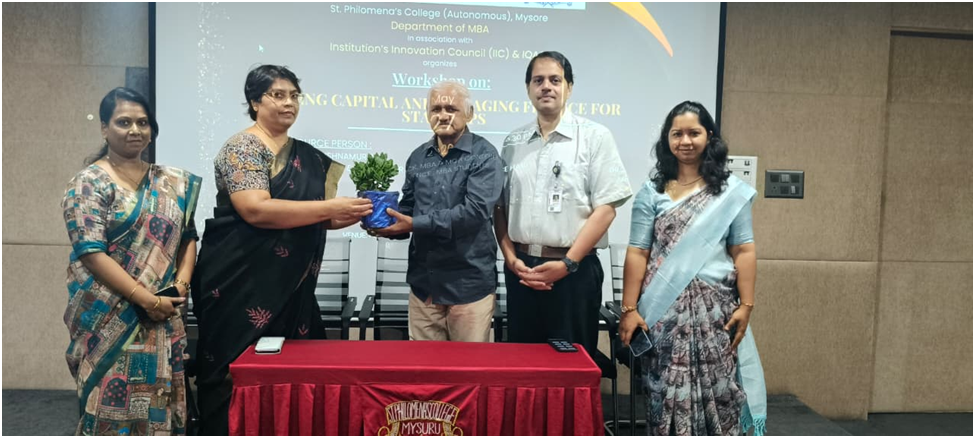
The inaugural session was graced by respected faculty members including Dr. Issac George, Head of the Department of MBA, Dr. Sadiya Tabassum, Dr. Divyashree, Dr. Shilpa, and Dr. Emily Surekha from the MBA Department.
The workshop was conducted by Mr. H. S. Krishna Murthy, Retired Banker and EDP Trainer, who shared his valuable experience and insights related to entrepreneurship development, sources of capital, government schemes, and financial planning. The session was highly informative, interactive, and beneficial for students in understanding the practical aspects of start-up management and finance.
The session focused on helping students understand the importance of entrepreneurship in today’s competitive business environment. The workshop highlighted various aspects of starting and managing a business, including identifying business opportunities, decision-making, and evaluating innovative business ideas. Students were encouraged to develop entrepreneurial thinking and leadership qualities.
The workshop was highly informative, interactive, and beneficial, enabling students to gain practical exposure to real-world entrepreneurial and financial concepts emphasizing on decision making.
Introduction of the Resource Person
Mr. H. S. Krishna Murthy holds an M.Sc. in Agriculture and a Diploma in Human Resource Management. He began his distinguished career with Syndicate Bank in April 1980 as a Rural Development Officer and served the organization for 35 years in various capacities before retiring in May 2015.
During his illustrious banking career, he held several key leadership positions, including Managing Director of Rythara Seva Sahakara Sangha Niyamitha, Bellary, Joint Director of RUDSETI Bengaluru, and Director of the National Academy of RSETIs. Through these positions, he contributed significantly to rural development, entrepreneurship promotion, and self-employment training programs across the country.
After retirement, Mr. Murthy continued his professional journey as a freelance trainer specializing in entrepreneurship development, banking, and soft skills training. He has been associated with reputed organizations such as CEDOK, TECSOK, SKDRDP, ANSIRD, SIUM, and several educational institutions.
With his rich experience and practical knowledge in banking and entrepreneurship, Mr. Murthy shared valuable insights and guidance with the students throughout the workshop.
Proceedings of the Workshop
The workshop covered several significant aspects related to entrepreneurship development, start-up financing, and financial management. The session was highly informative and provided students with practical insights into establishing and managing successful business ventures.
Entrepreneurial Success Stories
The resource person shared inspiring entrepreneurial success stories, including ventures such as Rameshwaram Cafe and Zerodha. Through these real-life examples, he explained how innovative business ideas, dedication, customer-oriented services, strategic planning, and effective management contribute to business growth and long-term success.
The discussion enabled students to understand the journey of successful entrepreneurs, the challenges faced during the initial stages of business, and the importance of perseverance and innovation in achieving entrepreneurial success. These examples motivated students to think creatively and explore entrepreneurial opportunities with confidence.
Decision-Making in Entrepreneurship
Mr. H. S. Krishna Murthy emphasized the importance of effective decision-making in entrepreneurship and business management. He explained that successful entrepreneurs must possess the ability to identify opportunities, analyze market conditions, take calculated risks, solve business problems efficiently, and make timely and informed decisions.
Types of Business Enterprises
The resource person provided detailed information regarding the classification of business enterprises under theMicro, Small, and Medium Enterprises (MSME) sector. He explained the categories based on the level of investment and annual turnover, along with their significance in economic development and employment generation.
The speaker also explained the financial limits prescribed under MSME classification and discussed how these enterprises contribute significantly to industrial growth, rural development, innovation, and job creation in the country. It helped students understand the structure, scale of operation, and economic importance of MSMEs in the business environment.
Becoming an entrepreneur
The session guided students on identifying their entrepreneurial potential and understanding the qualities required to become successful entrepreneurs. The resource person emphasized the importance of self-assessment, innovation, creativity, market understanding, risk-taking ability, and leadership skills. Students were encouraged to develop entrepreneurial thinking and explore business opportunities based on market needs and customer demands.
Screening of Business Ideas
Mr. Murthy explained the process of evaluating and selecting suitable business ideas before implementation. He discussed important factors such as market demand, availability of resources, financial feasibility, competition analysis, customer requirements, and profitability potential. The session helped students understand the importance of choosing practical and sustainable business ideas.
Sources of Capital for Start-Ups
An important part of the workshop focused on various methods of raising finance for start-ups and business ventures. The speaker explained internal funding and bootstrapping, debt financing through bank loans and financial institutions, equity financing through investors, and alternative funding methods such as venture capital, angel investors, crowdfunding, and hybrid financing models. Students gained awareness about different funding opportunities available for entrepreneurs.
Government Schemes for Entrepreneurs
The resource person introduced several government schemes that support entrepreneurs, MSMEs, and self-employment initiatives. The schemes discussed included
- Stand-Up India
- PMEGP
- PMFME
- MUDRA Loans
- NHM
- NLM
He explained the objectives, financial assistance, and benefits provided under these schemes for start-ups and small businesses.
Financial Planning and Management
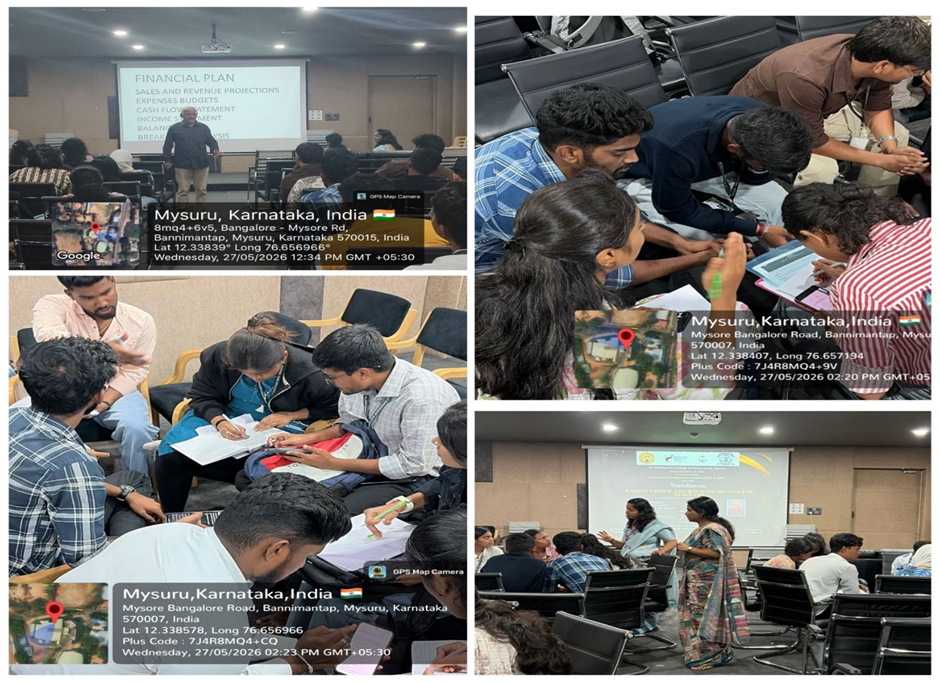
The workshop also highlighted the importance of financial planning in business operations. The speaker explained concepts such as sales and revenue projections, expense budgeting, cash flow statements, income statements, balance sheets, and break-even analysis. These concepts helped students understand the role of financial management and financial statements in effective business planning and decision-making.
Activity Conducted
During the afternoon session, students participated in a practical group activity. Students were divided into 5 groups and advised to
Identify a new business idea
Explain suitable methods of raising capital
Prepare basic financial statements
Analyze the financial feasibility of the proposed business
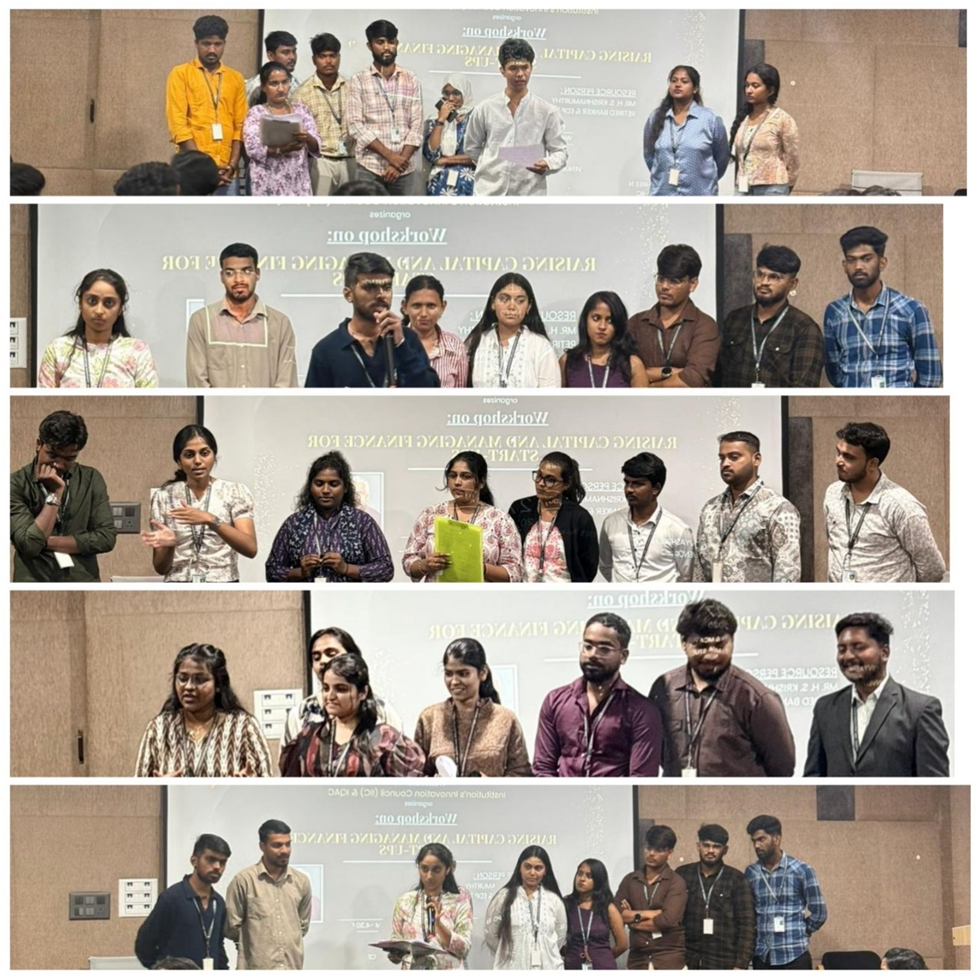
Group presented the ideas. The session motivated students to think innovatively and encouraged them to explore entrepreneurship as a career opportunity.
Conclusion
The workshop on “Raising Capital and Managing Finance for Start-Ups” was highly informative and beneficial for MBA students. Mr. H. S. Krishna Murthy shared valuable practical insights and real-life experiences from his extensive career in banking and entrepreneurship development.
The session successfully enhanced students’ understanding of entrepreneurship, financial management, and business planning. The practical activity conducted during the workshop further strengthened the learning experience by enabling students to apply theoretical concepts in a practical manner.
Overall, the workshop was successful in creating awareness about entrepreneurial opportunities, financial planning, and the importance of effective capital management for start-up ventures.

You may also like

Global Running Day
Student Exchange Program