Report on Webinar on Financial Awareness
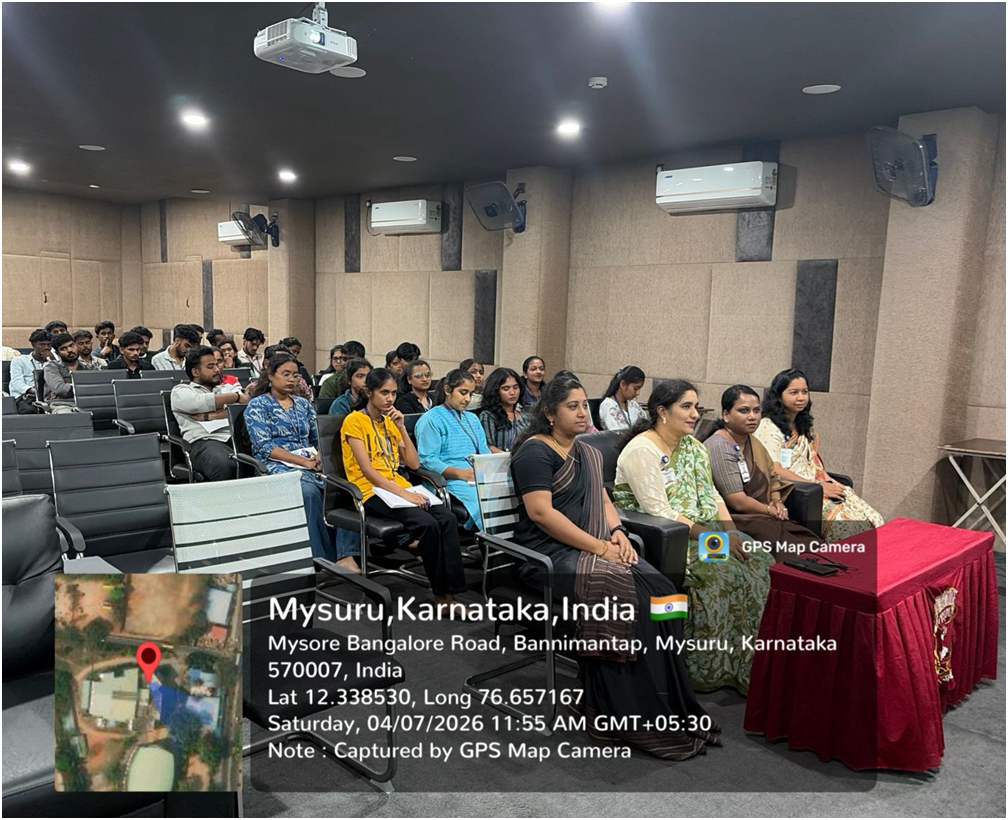
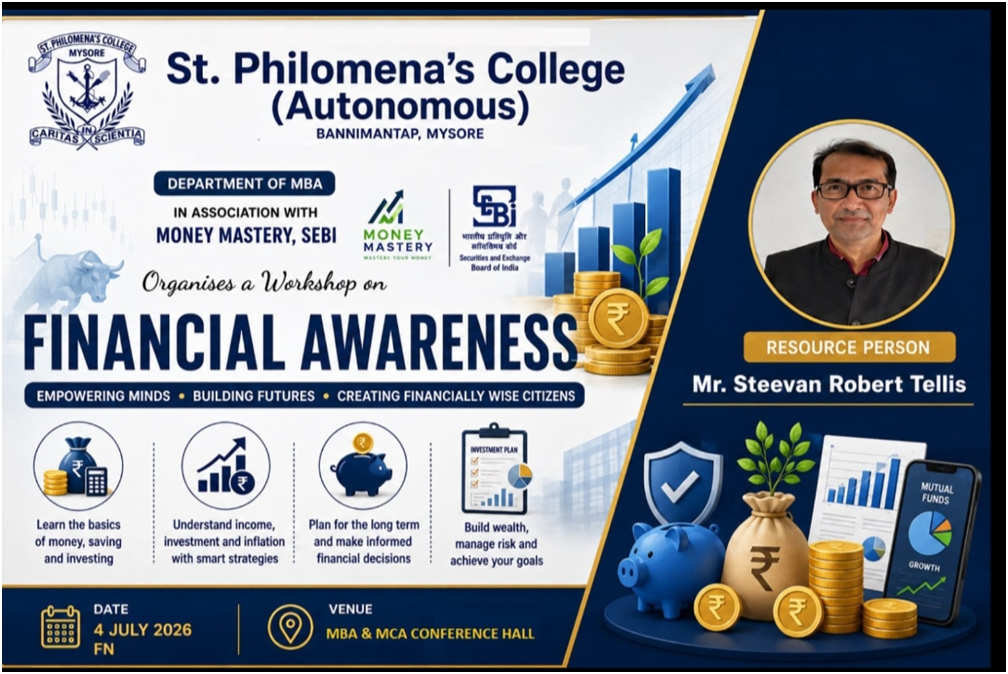
Introduction – A Webinar on Financial Awareness was held on 4th July 2026 at the Conference Hall, 2nd Floor, PG Block. The session, hosted by Mr. Steevan Robert Tellis, Assistant Professor, in Association with Money Mastery and SEBI (Securities and exchange Board of India) was attended by students, faculty members of MBA Department
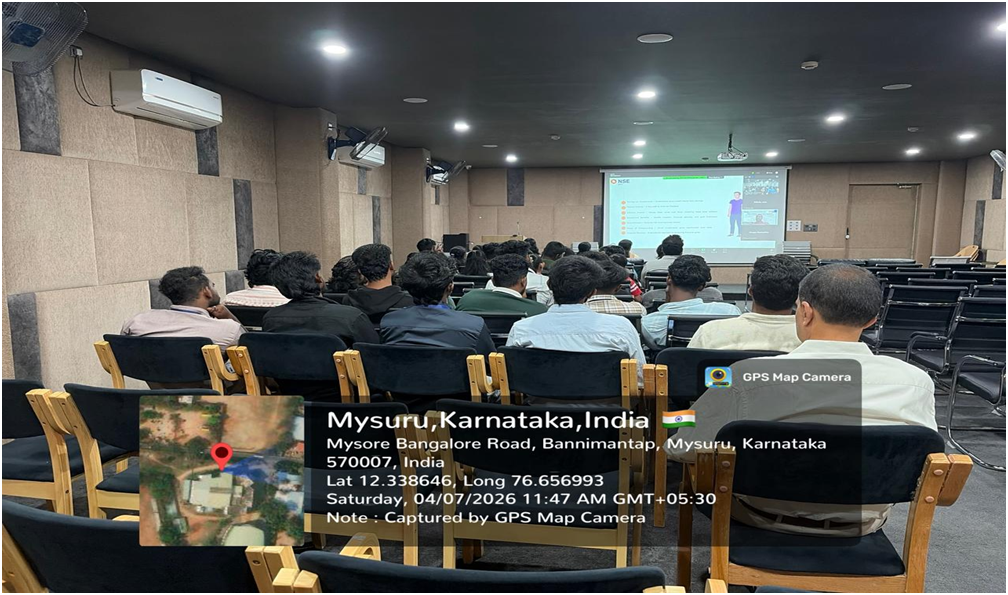
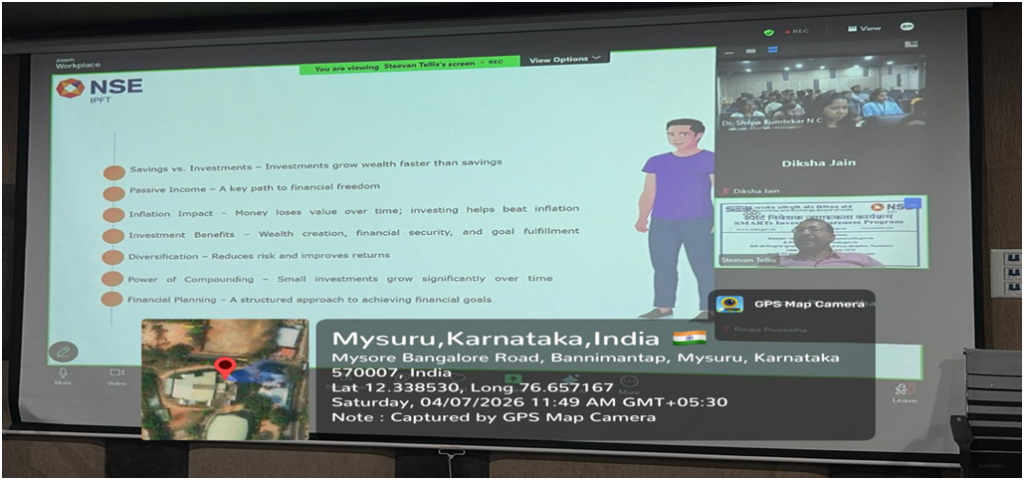
The resource person began by distinguishing between saving and investing, explaining that while savings primarily focus on preserving money, investments are intended to generate wealth over time and create opportunities for passive income. He introduced the structure of the securities market, describing the primary market, where companies raise capital through Initial Public Offerings (IPOs), and the secondary market, where investors trade already-issued securities through stock exchanges. Various investment avenues, including equity shares, fixed-income securities such as bonds and debentures, derivatives, and mutual funds, were discussed in detail. Students were also encouraged to evaluate important factors before investing, such as investment objectives, risk tolerance, investment horizon, liquidity requirements, tax implications, and the suitability of different financial products.
The workshop further focused on understanding investment risks and selecting appropriate investment strategies. Mr. Tellis explained different forms of risk, including market risk, unsystematic risk, inflation risk, and liquidity risk, emphasizing that higher expected returns are generally associated with higher levels of risk. He clearly differentiated trading from investing, highlighting that trading is primarily a short-term activity aimed at earning quick profits through frequent buying and selling, whereas investing is a long-term approach focused on wealth creation. The session also introduced participants to different categories of investors, such as value, growth, income, and index investors, along with various trading styles including day trading, swing trading, scalping, and position trading.
A significant portion of the workshop was devoted to mutual funds and other modern investment instruments. The speaker explained the benefits of mutual funds, including professional fund management, diversification, affordability, liquidity, tax advantages, and SEBI regulation. He also discussed different investor profiles—conservative, moderate, and aggressive—and explained how investment choices should align with individual risk preferences. The concept of Index Funds and Exchange Traded Funds (ETFs) was introduced, highlighting their low cost, broad market exposure, and suitability for long-term wealth creation. Participants were also introduced to various methods of investing in mutual funds, including Lump Sum Investment, Systematic Investment Plan (SIP), Systematic Withdrawal Plan (SWP), and Systematic Transfer Plan (STP). The session concluded with practical guidance on opening and using Demat and Trading Accounts, the importance of conducting proper research before investing, avoiding emotional and influencer-driven investment decisions, and investing only through SEBI-authorized intermediaries.
The workshop concluded with an insightful discussion on investor protection mechanisms available in India. Mr. Tellis explained the importance of SEBI’s investor awareness initiatives, the NISM Investor Awareness Test, SCORES 2.0 for grievance redressal, the Online Dispute Resolution (ODR) system, and measures related to Anti-Money Laundering (AML) and Combating Financing of Terrorism (CFT). These initiatives were presented as essential safeguards that promote transparency, investor confidence, and fair practices in the financial markets. Overall, the workshop provided students with a comprehensive understanding of financial planning, investment opportunities, risk management, and investor rights. The interactive session successfully enhanced participants’ financial awareness and encouraged them to adopt disciplined, informed, and responsible investment practices for long-term financial well-being.