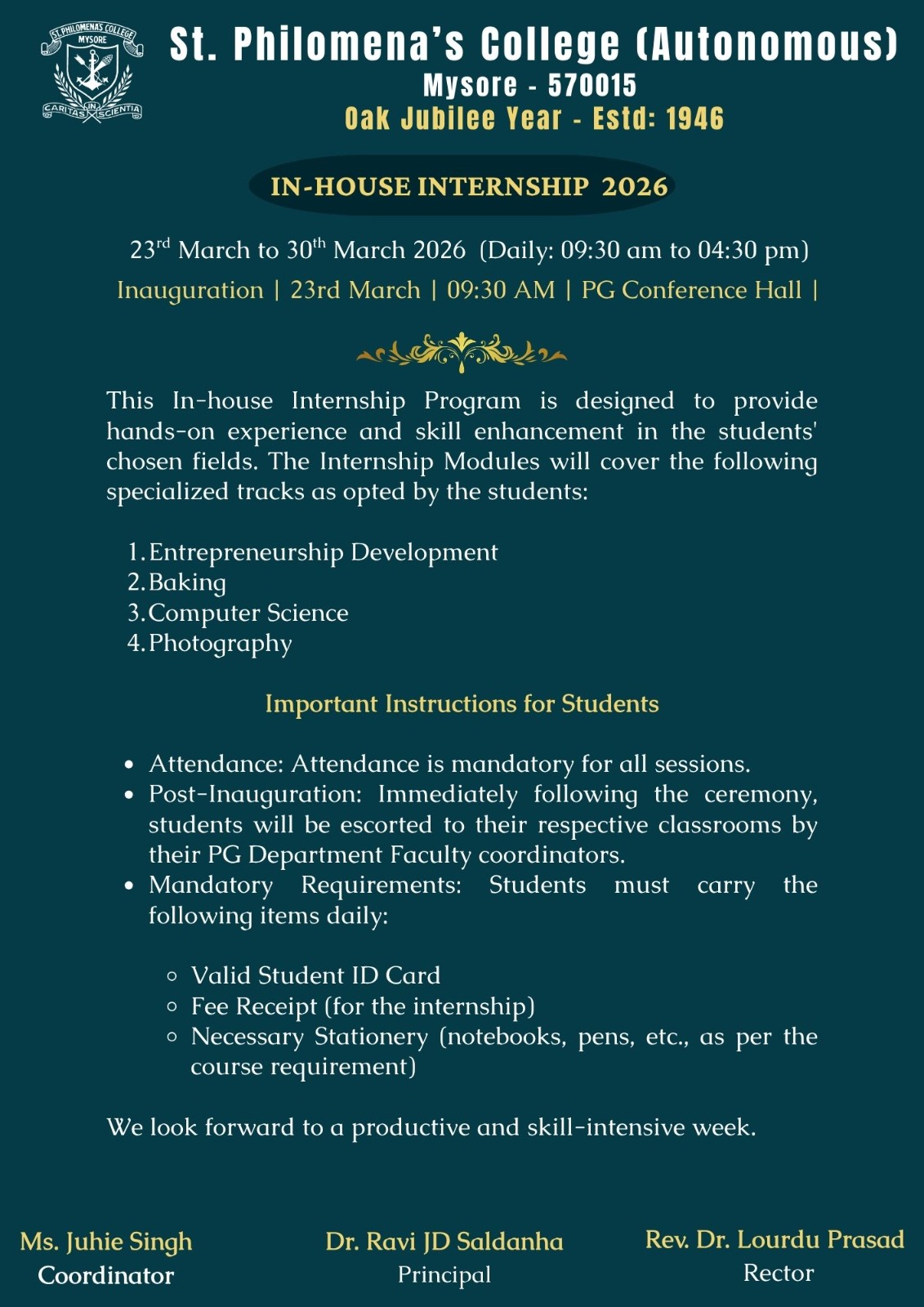
In-House Intenship-2026
Inauguration – 23rd March 2026
The In-house Internship Programme was inaugurated on 2nd April 2025, organized by the Department of M.com in association with the B.Com and BBA departments. The inaugural session was held from 9:30 AM to 10:30 AM with the gracious presence of the Rector Rev. Dr. Lourdu Prasad Joseph, Principal Dr. Ravi J D Saldanah,Vice Principal (Administration) Mr. Ronald Prakash Cutinha, IQAC Coordinator Mr. Thomas Gunaseelan, Controller of Examination and Dean of Commerce & Management Dr. Reena Francis PG Coordinator Dr. Noor Mubasheer CA, Internship Coordinator Ms. Juhie Singh P, Heads of Departments and Faculty members and students from various streams attended the Programme, marking the formal commencement of the internship activities.
The Programme began with a welcome address delivered by the Internship Coordinator Ms. Juhie Singh P who emphasized the significance of internship Programme in enhancing practical knowledge, skill development, and industry readiness among students. The dignitaries addressed the gathering, highlighting the importance of experiential learning and encouraging students to actively participate throughout the internship. The session concluded with a formal note of encouragement, setting a constructive and professional tone for the subsequent sessions.
DAY 1 – Entrepreneurship Development Session – 23th March 2026
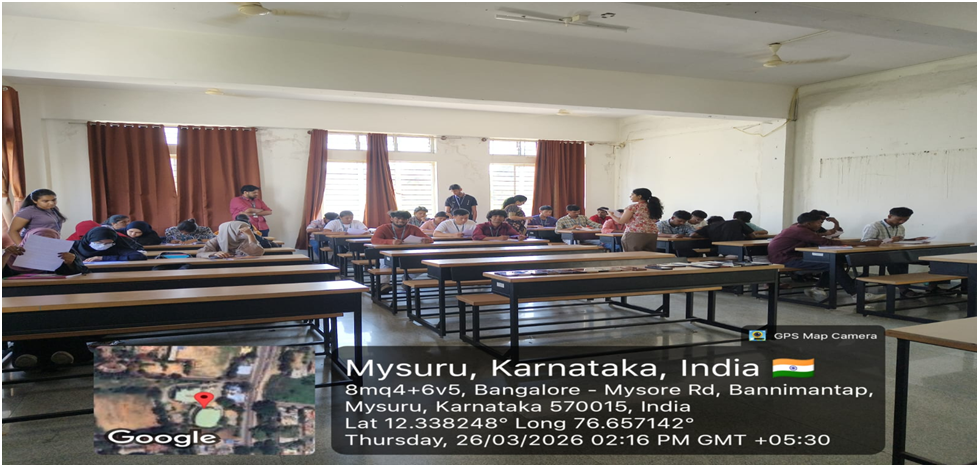
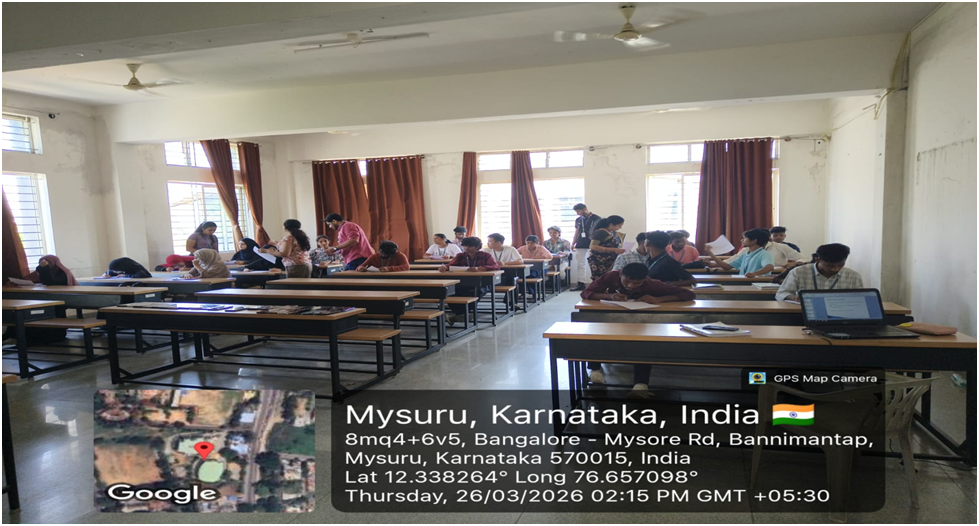
Session 1:Introduction to Entrepreneurship
Time: 9:30 AM to 10:30 AM
Speaker: Ms. Jayalakshmi B
Topic: Meaning and Importance of Entrepreneurship & Characteristics of Entrepreneurs
The session focused on the meaning and importance of entrepreneurship and its role in economic and social development. The discussion highlighted how entrepreneurs contribute to innovation, employment generation, and economic growth.
Further, the characteristics and skills of successful entrepreneurs such as leadership, creativity, risk-taking ability, and decision-making were explained in detail. The session helped students understand the mindset required to become successful entrepreneurs.
Session 2:Types of Entrepreneurs
Time:10:30 AM to 11:25 AM
Speaker: Ms. Jayalakshmi B
Topic: Types of Entrepreneurs
This session provided an overview of the different types of entrepreneurs, including small-scale, large-scale, social, and innovative entrepreneurs. The discussion emphasized how entrepreneurs differ based on their approach, scale, and objectives.
Examples were discussed to give students a clear understanding of each category and their relevance in the business environment.
Session 3: Identifying Entrepreneurial Opportunities
Time: 11:30 AM to 12:25 PM
Speaker:Ms. Jayalakshmi B
Topic: Identifying Entrepreneurial Opportunities
The session focused on techniques for identifying business opportunities in the market. Students were introduced to methods such as market observation, problem identification, and trend analysis.
The importance of recognizing gaps in the market and converting them into viable business ideas was emphasized.
Session 4: Entrepreneurial Self-Assessment
Time: 1:30 PM to 2:25 PM
Speaker: Ms. Jayalakshmi B
Topic: Entrepreneurial Self-Assessment Test
An entrepreneurial self-assessment activity was conducted to evaluate students’ strengths, weaknesses, and readiness to start a business. This activity helped students gain self-awareness and understand their potential as future entrepreneurs.
Session 5: Identification of Business Ideas
Time:2:30 PM to 3:25 PM
Speaker:Ms. Jayalakshmi B
Topic:Identification of 3 Potential Business Ideas
Students were engaged in identifying and developing three potential business ideas based on their interests and market needs.This session encouraged creativity, innovation, and practical thinking among students.
Session 6: Group Discussion on Successful Entrepreneurs
Time:3:30 PM to 4:25 PM
Speaker:Ms. Jayalakshmi B
Topic:Group Discussion on Successful Entrepreneurs in India
A group discussion was conducted on successful entrepreneurs in India, where students shared insights about their journeys, challenges, and achievements. This session motivated students and provided real-life examples of entrepreneurial success.
Learning Outcome – Day 1
- Developed understanding of entrepreneurship and its importance.
- Identified key entrepreneurial traits and skills.
- Learned how to recognize business opportunities.
- Improved creativity and idea generation ability.
- Gained inspiration from successful entrepreneurs.
DAY 2 – Entrepreneurship Development Session – 24th March 2026
The second day of the program focused on creativity, innovation, and structuring business ideas, enabling students to transform ideas into practical business models.
Session 1: Sources of Business Ideas:
Time: 9:30 AM to 10:30 AM
Speaker:
Topic: Sources of Business Ideas
The session explained various sources from which business ideas can be generated, such as customer needs, market gaps, technological advancements, social changes, and personal interests.Students were encouraged to observe everyday problems and think of innovative solutions that can be converted into business opportunities. Real-life examples were discussed to make the concept more practical and relatable.
Session 2: Innovation and Creativity in Business:
Time: 10:30 AM to 11:25 AM
Speaker:
Topic: Innovation and Creativity
This session emphasized the importance of innovation and creativity in sustaining and growing a business. It highlighted how creative thinking helps entrepreneurs develop unique products and services.Students were introduced to techniques like lateral thinking and problem-solving approaches, which help in generating innovative ideas and gaining a competitive advantage.
Session 3: Introduction to Business Model Canvas:
Time: 11:30 AM to 12:25 PM
Speaker: Ms. Juhie Singh P – In-house Internship Coordinator
Topic: Business Model Canvas
The session introduced the Business Model Canvas (BMC) as a strategic tool used for planning and organizing business ideas.Students learned about its key elements such as customer segments, value proposition, channels, revenue streams, and cost structure. This session emphasized how it helps in structuring and visualizing the business ideas effectively.
Session 4: Brainstorming Session for Startup Ideas:
Time: 12:30 PM to 1:25 PM
Speaker:Ms. Juhie Singh P– In-house Internship Coordinator
Topic: Brainstorming session for the start-ups
An interactive brainstorming activity was conducted where students worked in groups to generate startup ideas. The session encouraged free thinking, idea sharing, and group collaboration, allowing students to explore multiple possibilities without limitations. This helped in improving creativity and teamwork. The session was highly interactive and productive, enabling students to bridge theoretical knowledge with practical application.
Session 5: Preparation of Business Model Canvas
Time: 2:30 PM to 3:25 PM
Speaker:Dr. FloritaBernadetie Alexander
Topic: Business Model Development
This session focused on introducing students to the concept and structure of the Business Model Canvas as a tool for developing and visualizing business ideas. Students were guided through the nine key components of the canvas, including value proposition, customer segments, revenue streams and cost structure.
Students practically applied their learning by preparing a Business Model Canvas for their selected business ideas.They identified target customers, value propositions, and revenue models, which helped them, understand how to convert a raw idea into a structured business framework.
Session 6: Case Discussion of a Startup:
Time: 3:30 PM to 4:25 PM
Speaker:Dr. FloritaBernadetie Alexander
Topic: Case Study
A real-life startup case study was discussed, focusing on challenges faced and strategies adopted by entrepreneurs.Students analyzed factors such as innovation, funding, and market positioning, which enhanced their critical thinking and decision-making skills.
Learning Outcome – Day 2
- Developed ability to generate innovative business ideas.
- Understood the concept and application of Business Model Canvas.
- Improved teamwork and brainstorming skills.
- Gained practical exposure to business planning.
- Enhanced analytical thinking through case study discussion.
DAY 3 – Entrepreneurship Development Session – 25th March 2026
The third day emphasized market research, customer analysis, and data interpretation, which are essential for business success.
Session 1: Meaning and Importance of Market Research
Time: 9:30 AM to 10:30 AM
Speaker: Ms. Jayalakshmi B
Topic: Market Research
The session explained the role of market research in understanding customer needs and market trends.It highlighted how proper research helps in reducing business risks and making informed decisions.
Session 2: Identifying Target Customers
Time: 10:30 AM to 11:25 AM
Speaker:Ms. Jayalakshmi B
Topic: Target Market
Students learned techniques for identifying and segmenting target customers based on demographics, preferences, and behavior.The importance of focusing on the right audience for business success was emphasized.
Session 3: Competitor Analysis
Time: 11:30 AM to 12:25 PM
Speaker:Ms. Jayalakshmi B
Topic: Competitor Analysis
The session focused on analyzing competitors to understand their strengths, weaknesses, pricing strategies, and market position. Students learned how competitor analysis helps in creating better business strategies.
Session 4: Classroom Survey (Data Collection)
Time: 1:30 PM to 2:25 PM
Speaker:Ms. Jayalakshmi B
Topic: Data Collection
An instant classroom survey was conducted where students collected real-time data from their peers.This activity helped students understand the process of questionnaire design and data gathering.
Session 5: Role Play Activity
Time: 2:30 PM to 3:25 PM
Speaker:Ms. Jayalakshmi B
Topic: Buyer-Seller Interaction
Students participated in a role play activity, simulating real-life buyer and seller situations. This improved their communication, negotiation, and persuasion skills.
Session 6: Data Interpretation
Time: 3:30 PM to 4:25 PM
Speaker:Ms. Jayalakshmi B
Topic:Data Analysis
Students analyzed the collected data using percentages and simple charts such as bar diagrams.This session enhanced their ability to interpret data and draw meaningful conclusions.
Learning Outcome – Day 3
- Understood importance of market research
- Developed customer identification skills
- Learned competitor analysis techniques
- Gained practical experience in data collection and interpretation
- Improved communication and analytical skills
DAY 4 – Entrepreneurship Development Session – 26th March 2026
The fourth day focused on financial planning and feasibility analysis of business ideas.
Session 1: Startup Cost Estimation
Time: 9:30 AM to 10:30 AM
Speaker: Ms. Amrin Taj
Topic: Cost Estimation
In this session, students learned how to estimate the total initial cost required starting a business. They identified various expenses such as fixed costs (rent, machinery) and variable costs (raw materials, utilities), helping them understand the financial requirements before launching a startup.
Session 2: Sources of Finance for Startups
Time: 10:30 AM to 11:25 AM
Speaker:Ms. Amrin Taj
Topic: Sources of Finance
The session covered various funding sources such as bank loans, venture capital, government schemes, and personal savings.Students gained awareness about financial support available for startups.Students were introduced to different sources of funding available for startups, including personal savings, bank loans, venture capital, angel investors, and government schemes. This helped them understand how businesses raise capital at different stages.
Session 3: Preparation of Startup Budget
Time:11:30 AM to 12:25 PM
Speaker:Ms. Amrin Taj
Topic: Budgeting
This session focused on preparing a simple startup budget by planning expected income and expenses. Students prepared a simple startup budget, considering expected income and expenses.This helped them understand financial planning and resource allocation.
Session 4: Break-even Concept
Time:1:30 PM to 2:25 PM
Speaker:Ms. Amrin Taj
Topic: Break-even Analysis
The concept of break-even point was explained to show when a business covers all its costs and starts making profit. Students understood the relationship between cost, revenue, and profit through simple examples. Students calculated BEP related to their respective budget.
Session 5: Profit v/s Loss Case Study
Time: 2:30 PM to 3:25 PM
Speaker:Ms. Amrin Taj
Topic:Case Study
Through a case study, students analyzed real-life business situations to understand how profits are earned or losses occur. This helped them develop decision-making and analytical skills.
Session 6: Scheme Identification Activity
Time: 3:30 PM to 4:25 PM
Speaker:Ms. Amrin Taj
Topic: Government Schemes
In this activity, students explored various government schemes that support startups and small businesses. They identified suitable schemes based on business ideas, enhancing their awareness of financial assistance and benefits available for entrepreneurs.
Students learned how to calculate initial investment required for starting a business, including fixed and variable costs.The importance of proper cost estimation for business success was highlighted.
Learning Outcome – Day 4
- Learned financial planning and budgeting
- Understood cost estimation and BEP
- Gained knowledge of funding sources
- Developed financial decision-making skills
DAY 5 – Entrepreneurship Development Session – 27th March 2026
The fifth day focused on business planning, branding, and presentation skills.
Session 1: Business Plan Structure
Time:9:30 AM to 10:30 AM
Speaker: Ms. Supritha
Topic: Business Plan
The session introduced students to the basics of a business plan structure. They learned about key components such as business idea, objectives, target market, marketing strategies, and financial planning. This helped them understand how to organize and present a business idea in a clear and practical manner.
Session 2: Branding and Digital Promotion
Time: 10:30 AM to 11:25 AM
Speaker: Ms. Supritha
Topic: Marketing
The session covered branding and digital promotion. Students understood the importance of creating a unique brand identity through name, logo, and tagline. They were also introduced to simple digital promotion methods like social media marketing and online advertisements to reach a wider audience.
Session 3: Preparation of Business Plan
Speaker: Ms. PriyankaOlivera
Time: 11:30 AM to 12:25 PM
Topic: Business Plan Preparation
This session focused on nurturing students’ entrepreneurship mindset by guiding them through the process of transforming a basic business idea into a structured and practical plan. Students were introduced to the key components of a business plan, enabling them to conceptualize and organize their ideas effectively. Students prepared a simple business plan based on their ideas.
Session 4: Poster/Social Media Advertisement
Time: 1:30 PM to 2:25 PM
Speaker:Ms. PriyankaOlivera
Topic: Promotion
Students designed posters and advertisements, improving creativity and marketing skills. They further enhanced their creativity by designing promotional materials such as posters and social media advertisements to market their proposed ventures.
Session 5: Startup Pitch
Time: 2:30 PM to 4:25 PM
Speaker:Ms. PriyankaOlivera
Topic: Pitching
This session culminated in a startup pitch presentation, where students showcased their ideas, demonstrating both innovation and strategic thinking.
Final presentations were given, followed by feedback and suggestions for improvement to help the students refine their concepts while strengthening their communication, presentation and entrepreneurial skills.
Learning Outcome – Day 5
- Learned business plan preparation
- Developed marketing and branding skills
- Improved presentation and communication skills
- Gained confidence in pitching ideas
DAY 6 – Industrial Visit – 11th April 2026
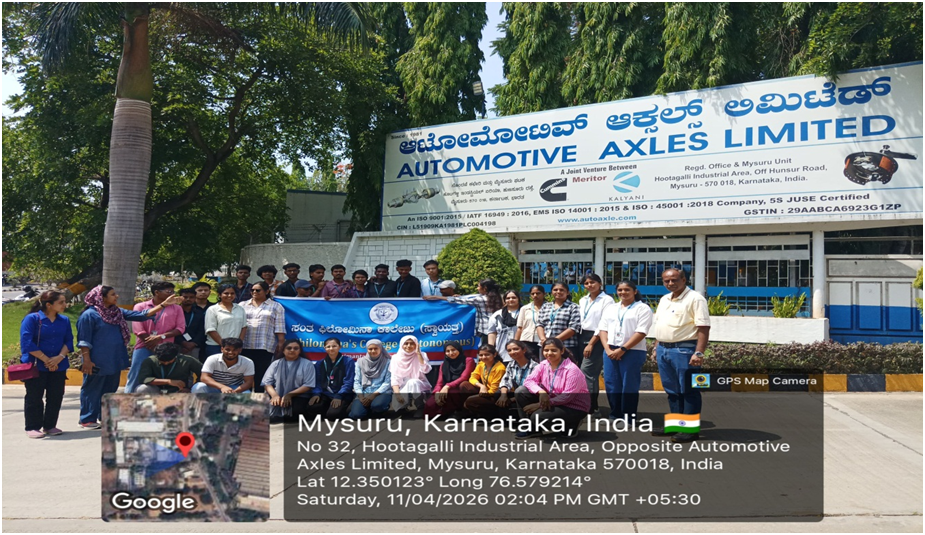
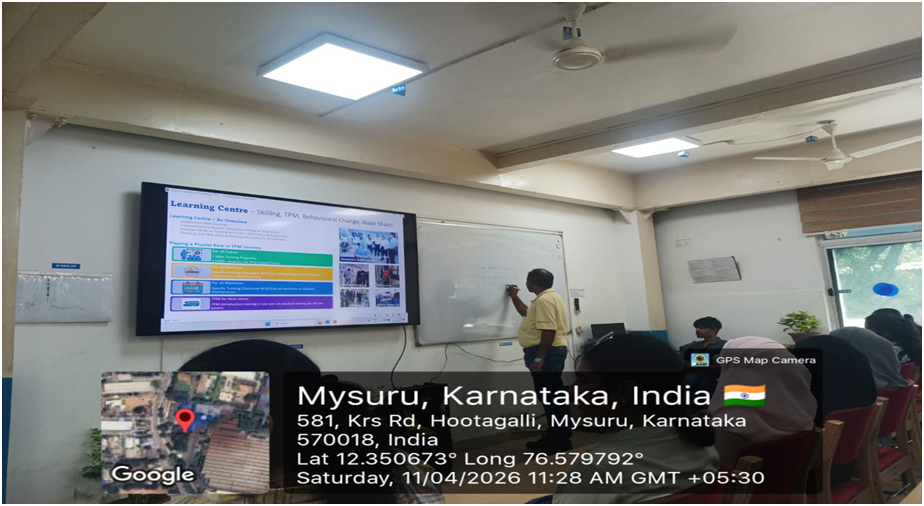
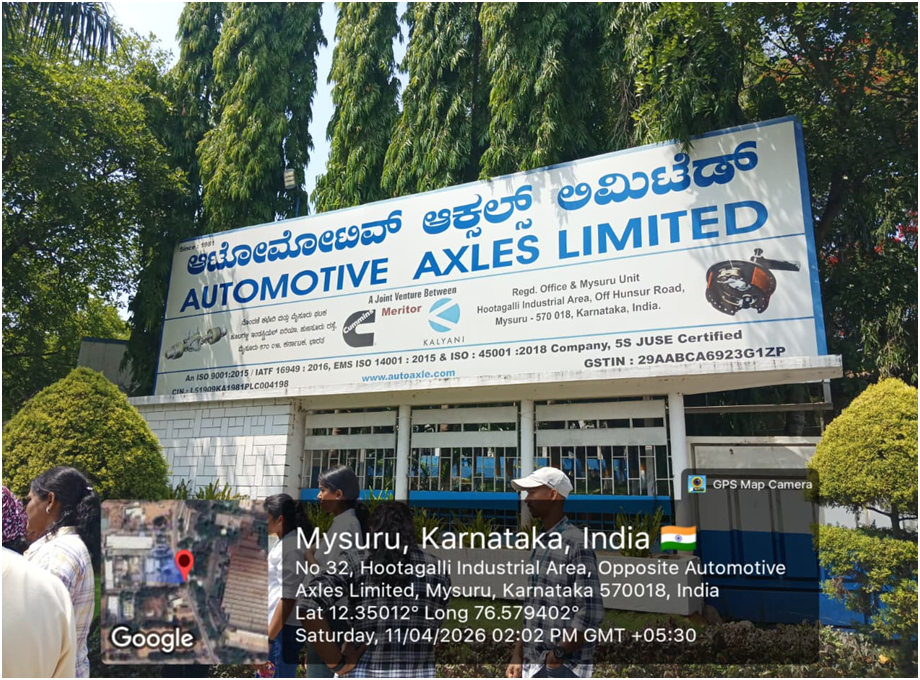
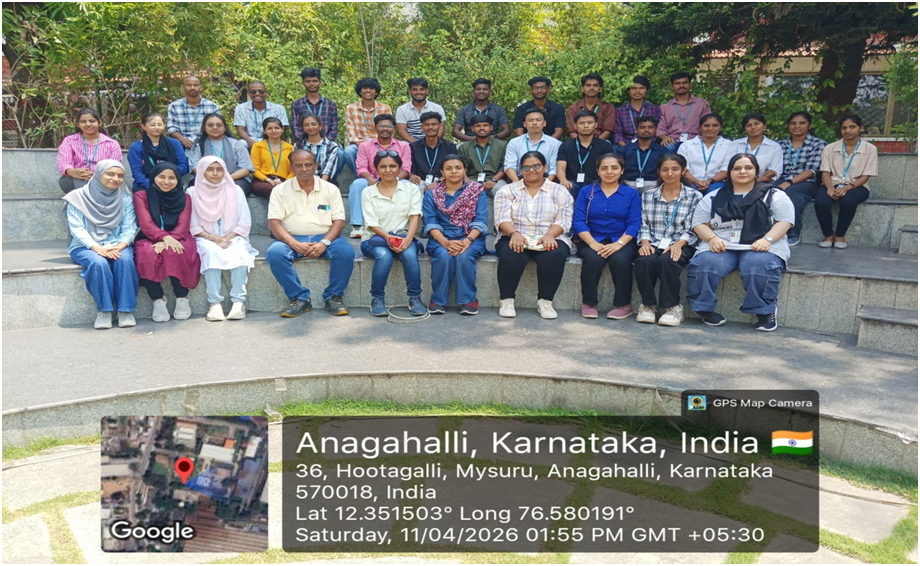
As part of the internship program, an industrial visit was organized to Automotive Axles Limited, located in Mysuru. The objective of the visit was to provide students with practical exposure to industrial operations and enhance their understanding of manufacturing processes in the automobile sector. During the visit, students were briefed on the company’s organizational structure, production techniques, and quality assurance systems. The technical team provided detailed insights into the manufacturing and assembly of axles, along with the use of advanced machinery and adherence to safety standards within the plant.
The industrial visit served as an effective platform for experiential learning, enabling students to connect theoretical concepts with real-time industrial practices. It facilitated the development of knowledge related to production management, workflow efficiency, and industrial discipline. The interaction with industry professionals also helped students gain awareness about career prospects and skill requirements in the manufacturing sector. Overall, the visit significantly contributed to the achievement of learning outcomes and added value to the internship program.
Learning Outcome – Day 6
- Understood real-time industrial manufacturing processes.
- Gained knowledge of axle production and assembly.
- Learned about quality control and safety measures.
- Developed awareness of production management practices.
- Improved understanding of teamwork in industries.
- Bridged the gap between theory and practical exposure.
- Identified career opportunities in the manufacturing sector.
- Enhanced observation and analytical skills.