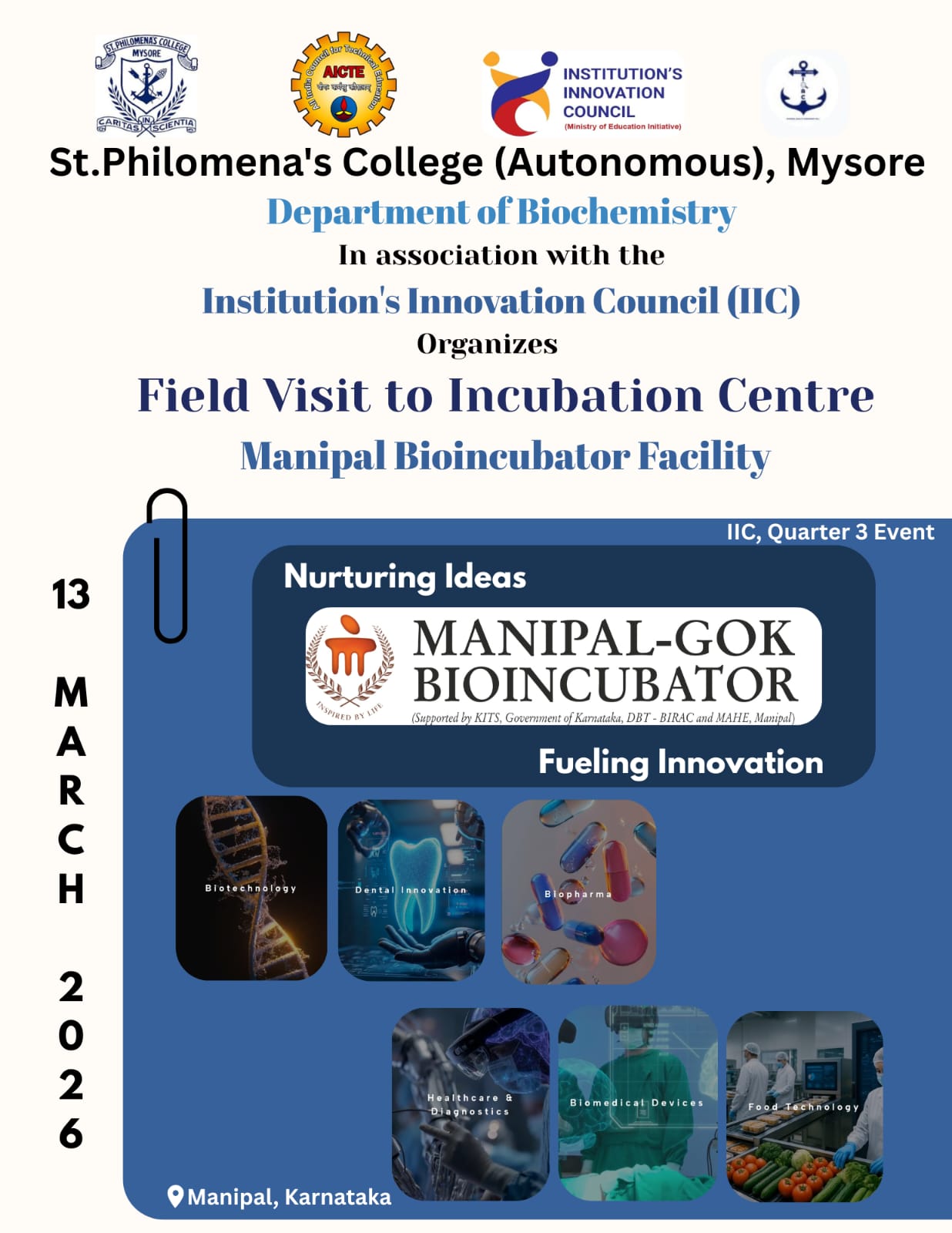
MANIPAL -GOK BIOINCUBATOR
DEPARTMENT OF CHEMISTRY AND BIOCHEMISTRY
REPORT ON
INDUSTRIAL VISIT TO MANGALORE
Date: 12-14thMarch 2026
Place: Mangalore, Karnataka
No. of Participants:- 21
Students: 18Staff : 03
Introduction:To help bridge the gap between textbook theory and professional practice, the Department of Chemistry and Biochemistry organized an industrial excursion to Mangalore. This report documents our visits to Mangalore Pipe Industries, Mangalagangothri, and the Manipal Bioincubator Facility, highlighting the synergy between our academic coursework and the practical complexities of the industry.
The study tour, which took place from March 12th to 14th, 2026, comprised a group of eighteen second- and third-year students from the Chemistry and Biochemistry departments, guided by three faculty members. The group departed from Mysuru by bus at 10:00 PM on the 12th, reaching Mangalore, Karnataka, at 4:00 AM the next morning.
Objectives of the Visit
1. Bridge the gap between theoretical concepts and industrial applications.
2. Gain exposure to advanced analytical instrumentation.
3. Understand industrial safety and environmental protocols.
4. Explore career pathways in Research and Development (R&D).
5. Observe the transition from “Lab to Market.”
6. Increase student understanding of potential career and research opportunities in chemistry and biochemistry.
Day 1: 12-03-2026
Industry/Institute Visited
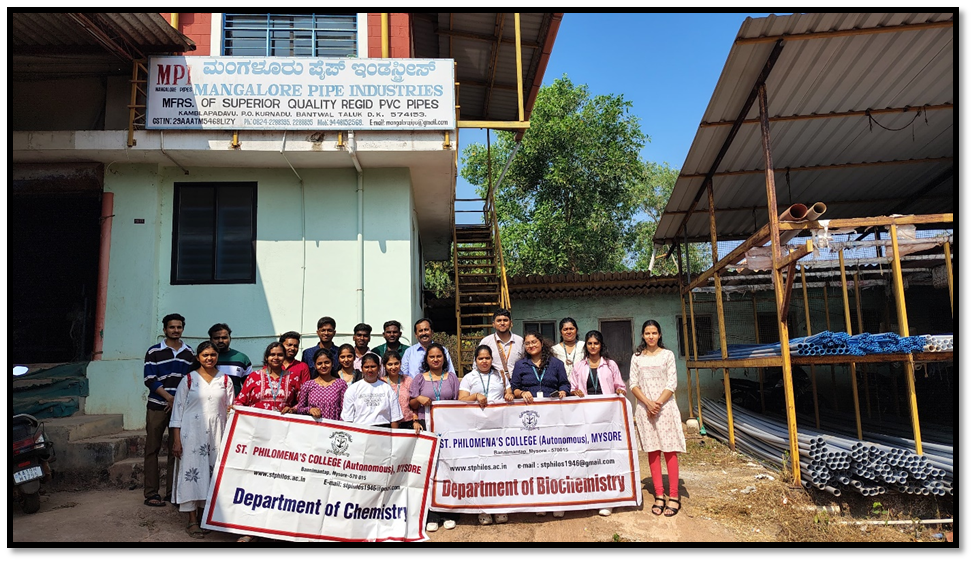
1. Mangalore Pipe Industries
Time of visit: 09:30am – 11:00pm
Mangalore Pipe Industries is a key player in the plastic piping industry in Karnataka.
Location: Primarily based in the Mangaluru industrial region.
Core Products: HDPE Pipes: High-density polyethylene pipes used for water supply, irrigation, and industrial fluids.
PVC/uPVC Pipes: Rigid pipes used for plumbing, drainage, and electrical conduits.
Casing Pipes: Specifically designed for borewell applications.
Standards: They typically adhere to BIS (Bureau of Indian Standards) such as IS 4984 for HDPE pipes and IS 4985 for PVC pipes.
Workflow: The workflow at Mangalore Pipe Industries follows a linear Extrusion Process.
i) Raw Material Preparation: Insight into the mixing process (stabilizers, lubricants, and pigments).
ii) Extrusion: Explanation of feeding and melting processes and the formation of initial cylindrical shape of the pipe.
iii) Sizing and Cooling:Description of using vacuum and cooling tank for sizing and solidifying the plastic.
iv)Haul-off and Printing:Explanation of the process of using a puller that pulls the pipe at a synchronized speed to maintain uniform thickness, and marking the pipe with important details (brand name, size, pressure rating, BIS license number).
v) Cutting and Storage:Insight into the cutting of the PVC pipes into standard lengths and its storage.
The visit to Mangalore Pipe Industries provided students with a practical understanding of large-scale industrial manufacturing processes involved in producing high-grade PVC and HDPE piping systems.
2. Mangalore University (Mangalagangothri)
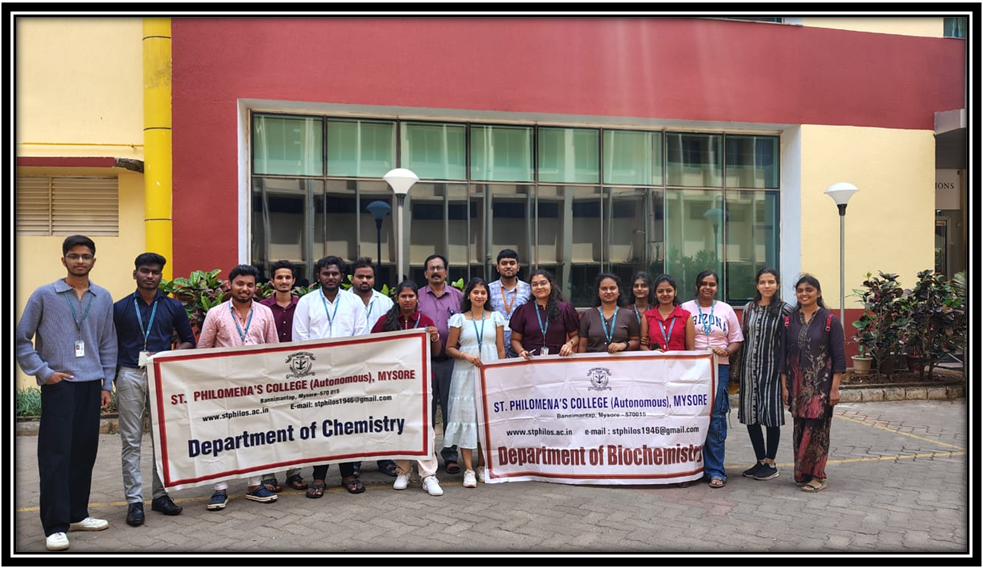
Time of visit: 11:30am – 2:30pm
Mangalagangothri, located about 20 km to the south-east of the historic coastal town of Mangalore, sets the tone for the educational endeavours of the three districts under the jurisdiction of the University. It is a picturesque campus that sprawls over 353 acres, overlooking the confluence of the river Nethravathi with the Arabian Sea on one side, and the cloud-capped Western Ghats on the other. The campus, which once housed only three postgraduate departments, now has 26 postgraduate departments, supported by modern infrastructure and experienced faculty.
Department of Zoology Museum
The Zoology Museum at Mangalore University is one of the most comprehensive biological repositories in the coastal Karnataka region.
Taxonomic Diversity: The museum houses an extensive collection of preserved specimens ranging from marine invertebrates to large mammals. It is particularly noted for its marine biodiversity collection, reflecting the university’s proximity to the Arabian Sea.
Special Exhibits:
Skeletal Mounts: Detailed articulated skeletons of various mammals and birds.
Wet Specimens: A vast array of fish, amphibians, and reptiles preserved in formalin, categorized by family and genus.
Entomology Section: A specialized collection of regional insects, butterflies, and moths, showcasing the Western Ghats’ biodiversity.
Educational Purpose: The museum serves as a “living textbook,” allowing students to observe morphological features and evolutionary adaptations that are otherwise difficult to see in the wild.
Department of Biosciences (Molecular Genetics)
The molecular genetics research at Mangalore University is primarily housed under the Department of Biosciences. This department is a hub for modern biotechnology and genetic research.
Core Research Areas: The department focuses on Genotoxicology, Population Genetics, and Molecular Biology.
Advanced Facilities:
PCR & Electrophoresis: Standard molecular tools for DNA amplification and fragment analysis.
Cell Culture Lab: Facilities for maintaining cell lines to study genetic expression and mutations.
Department of Chemistry
The Department of Chemistry is one of the university’s oldest and most prestigious departments, known for high-impact research and sophisticated instrumentation.
Specialized Labs: The department is divided into wings for Inorganic, Organic, Physical, and Analytical Chemistry, each equipped for specific synthetic and testing workflows.
Instrumentation Center (NMR Facility): One of the highlights is the NMR (Nuclear Magnetic Resonance) spectrometer, which is essential for determining the structure of organic molecules.
Other high-end equipment includes HPLC (High-Performance Liquid Chromatography), UV-Vis Spectrophotometers, and FT-IR Spectrometers.
Industrial Relevance: The department actively works on Polymer Chemistry and Medicinal Chemistry, which are directly applicable to the pharmaceutical and plastic industries.
Research Output: It is a major center for Ph.D. scholars, focusing on the synthesis of new compounds with potential anti-cancer or anti-bacterial properties.
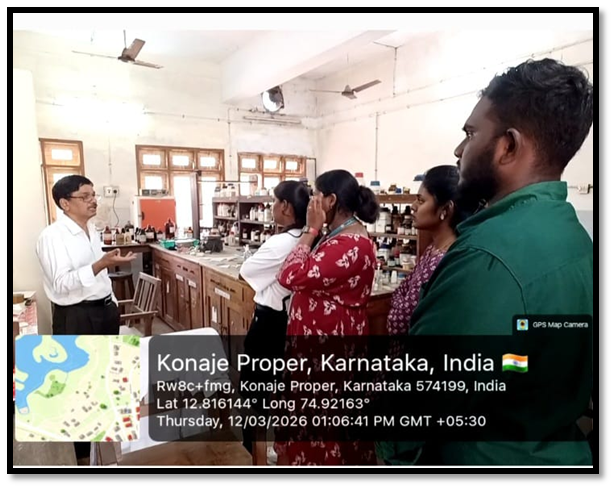
The multi-departmental visit to Mangalagangothri provided the students with a holistic exposure to the continuum of science, spanning from the biodiversity and evolutionary history preserved in the Zoology museum to the advanced molecular and chemical analysis techniques used in Genetics and Chemistry research.
Day 1: Visit to tourist attractions in Mangalore
i. St. Aloysius Chapel
Known as the “Sistine Chapel of India,” this 19th-century architectural marvel is famous for its breathtaking interior. Every inch of the walls and ceilings is covered in frescoes and oil paintings by Italian Jesuit Antonio Moscheni, depicting the life of St. Aloysius Gonzaga and Jesus Christ.
ii. St. Aloysius Museum
Located within the same college campus, this museum houses an eclectic collection of historical artifacts. Highlights include Mangalore’s first car, the city’s first generator, a massive whale skeleton, Neolithic stone axes, and rare collections of stamps, coins, and old manuscripts.
iii. Kudroli Gokarnath Temple
Consecrated by the social reformer Narayana Guru in 1912, this temple is a symbol of equality and spirituality. It features a striking 60-foot golden Gopuram and is built in the Chola style of architecture. It is most vibrant during the Mangalore Dasara celebrations when the entire complex is illuminated.
iv. Tannirbhavi Beach
Located away from the city’s main hustle, this beach is reached via a scenic ferry ride from Sultan Battery or by road across the Kuloor Bridge. It is popular for its calm environment, well-maintained Tree Park, and beautiful sunset views. It offers basic water sports like jet skiing.
Day 2: 13-03-2026
Industry/Institute Visited
1. Manipal Bioincubator Facility
Time of visit: 11:00am – 1:00pm
Manipal – Government of Karnataka Bioincubator is an initiative by Manipal Academy of Higher Education (MAHE) and the Government of Karnataka, under Manipal University Technology Business Incubation Society, to facilitate Innovation and Incubation in the Bio-Medical Domain. This Incubation platform, developed in 2019, aims to upscale innovations specializing in technology, propelling innovative ideas towards product commercialization.
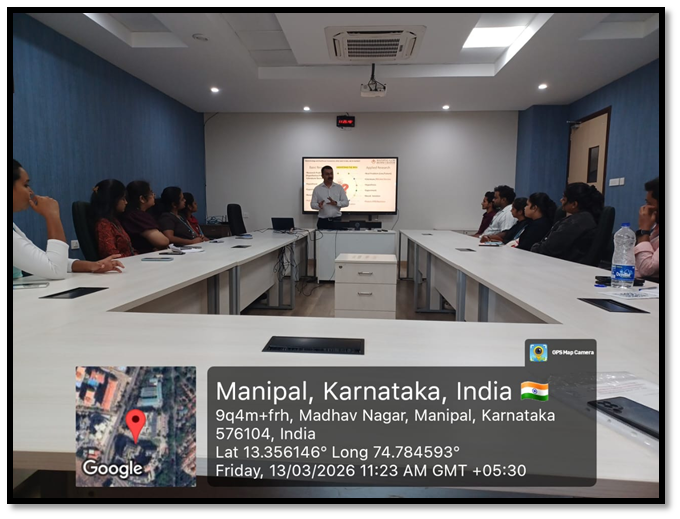
Dr. Manesh Thomas, CEO, Manipal-GoK Bioincubator, addressed the students and provided valuable insights into the biotechnology innovation ecosystem, startup incubation, and research translation.
The interaction session was followed by guided tour of the facility, mainly covering the 3D printing lab, Wet labs for molecular biology, biochemistry, and general life sciences research, Common Instrumentation Facility, Microfluidic lab, Fabrication lab, Electronic testing lab,and Design and simulation lab.
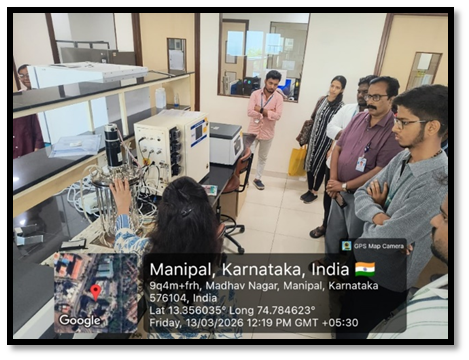
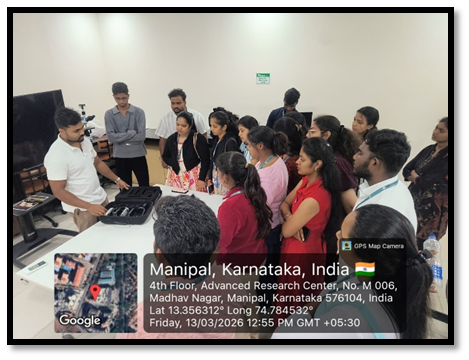
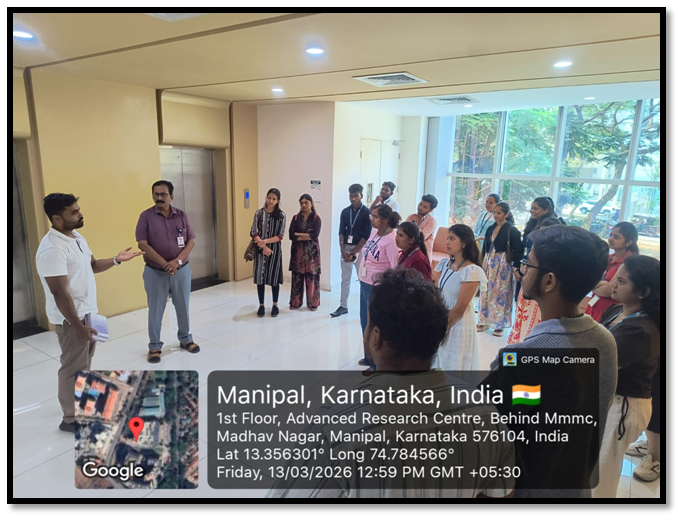
The visit to the Manipal-GoK Bioincubator exposed participants to a premier facility dedicated to nurturing startups, focusing on the journey of an idea from concept to a tangible market-ready product.
Day 2: Visit to tourist attractions in Mangalore
i. St. Mary’s Island (Malpe)
A short ferry ride from Malpe (near Udupi), it is a National Geological Monument. It is world-renowned for its unique columnar basaltic rock formations-hexagonal pillars formed by volcanic activity millions of years ago. There is no sand beach for swimming; it is primarily for sightseeing and photography.
Day 3:14-03-2026
Visit to tourist attractions in Mangalore
i. Pilikula Nisargadhama
An integrated eco-educational park. The Mega Combo ticket is the most efficient way to explore its vast sections:
- 3D Planetarium: India’s first 3D 8K digital planetarium.
- Biological Park: A wildlife zoo featuring native Western Ghats species.
- Heritage Village: A walkthrough of traditional Tulu culture and “Guthu” houses.
- Science Centre & Lake Garden: Offers interactive science exhibits and boating.
ii. Panambur Beach
Often cited as one of the cleanest and safest beaches in India, Panambur is famous for hosting the International Kite Festival. It is highly commercialized with lifeguards, camel/horse rides, and a variety of adventure sports including parasailing and ATV rides.
Outcome of the Visit
The industrial visit to Mangalore allowed students to see how the theories they learn in class are actually put into practice within the industry.The key outcomes of the visit include:
- Real-World Manufacturing: Studentsobserved how raw chemical materials are turned into industrial products at Mangalore Pipe Industries, seeing how large-scale machinery operates in a real factory setting.
- Exposure to Advanced Tools:Students explored specialized research laboratories and high-tech instrumentation that are typically unavailable in standard classrooms, showing them how advanced experiments are conducted.
- Insight into Bio-Innovation: At the Manipal Bioincubator Facility, the group learned how new scientific ideas are turned into actual businesses, highlighting the journey from a lab experiment to a commercial product.
- Workplace Safety and Standards: The participants gained a firsthand look at the strict safety rules and environmental standards that facilities must follow, which are much more complex than standard classroom safety protocols.
- Career Preparation: By interacting with experts in the field, students gained a better understanding of the different jobs available in the chemistry and biochemistry sectors and the skills needed to succeed in them.
Conclusion
The industrial visit to Mangalore provided a valuable bridge between academic learning and professional reality. By seeing the daily operations of manufacturing plants and research hubs, the students were able to see exactly how their coursework applies to the industry.
The exposure visits successfully shifted their perspective from a purely theoretical understanding to a more practical one, leaving the group better prepared for the demands of the professional world. This experience served as a reminder that while the classroom provides the foundation, the industry is where that knowledge is put to the test.

You may also like
Supplementary Notice

Congratulations