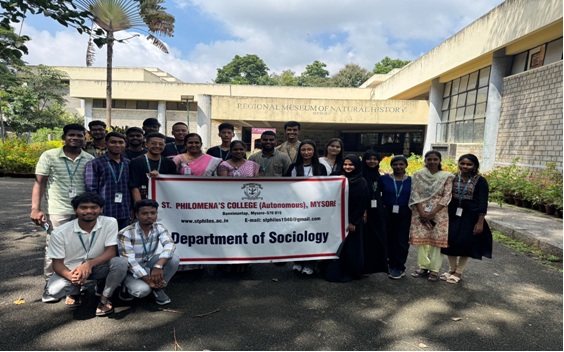
Regional Museum of Natural History, Mysore
Introduction
The Regional Museum of Natural History, Mysore is a government-run natural history museum established in 1995 under the Ministry of Environment and Forests, Government of India. It serves as the southern regional centre of the National Museum of Natural History (New Delhi) and focuses on environmental education, biodiversity, and conservation awareness.
Purpose of Visit
The main aim of the visit was to explore natural history exhibits, understand ecological diversity of southern India, and engage in interactive learning experiences.
Exhibits & Galleries
During the visit, the following key galleries and features were experienced:
1. Biological Diversity Gallery
Display of flora and fauna of southern India.
Geological specimens, life-size models, and dioramas helped explain biodiversity.
2. Life Through the Ages Gallery
A timeline of life on Earth from origin to evolution.
Walk-through tunnel visualized major stages in natural history.
3. Interactive Discovery Centre
Hands-on learning exhibits for children and students.
Activities included examining specimens, puzzles, and games that enriched understanding.
4. Special Exhibitions & Films
Temporary displays on current natural history themes.
Daily screenings of educational films related to wildlife and the environment.
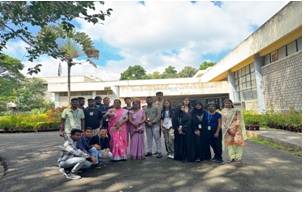
Learning Outcomes:
The visit helped the students to understand human evolution and biological diversity, which forms the foundation for studying social and cultural development.
· Students gain insights into the interaction between humans, nature, and environment, an important aspect of environmental sociology.
· Exhibits on fossils, tools, and early life forms help students relate material culture to social change over time.
· The visit enhances understanding of indigenous communities, biodiversity, and ecological balance, linking society with natural systems.
· It encourages experiential learning, enabling students to connect theoretical concepts with real-life evidence.
· Students develop critical observation skills by analyzing displays from a sociological perspective.
· The museum visit promotes awareness about conservation, sustainability, and social responsibility.
· It supports interdisciplinary learning by linking sociology with anthropology, history, and environmental studies.

You may also like
PHILO’S KALARAVA

Title: Role Play Activity Highlighting Contemporary Social Issues