Title: Role Play Activity Highlighting Contemporary Social Issues
Department: Sociology
Participants: Sociology Students
Activity Type: Experiential Learning / Role Play
Introduction
The Department of Sociology organized a role play activity as part of experiential learning to create awareness and deepen students’ understanding of contemporary social issues. Role play as a pedagogical tool helps students connect sociological theories with real-life social problems and encourages critical thinking, empathy, and social responsibility.
Objectives of the Activity
To sensitize students to pressing social issues in society
To enhance students’ communication and presentation skills
To encourage teamwork and creative expression
To relate sociological concepts to real-life situations
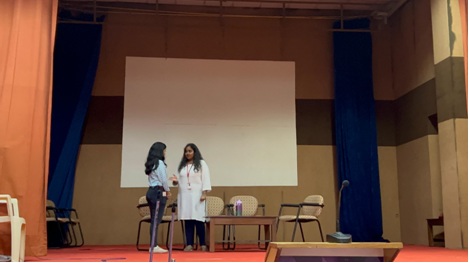
Description of the Activity
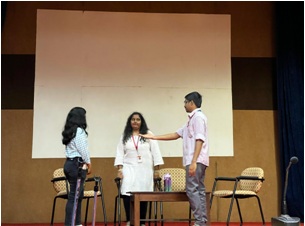
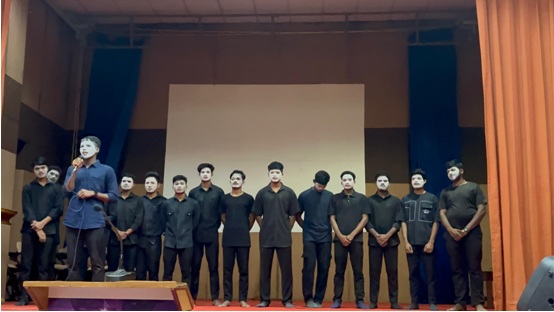
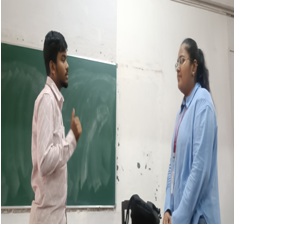
The sociology students actively participated in a role play activity focusing on various social issues prevalent in society. The students prepared short skits portraying real-life situations and social conflicts. Each group selected a theme and effectively presented the problem, its causes, and possible solutions through dialogue and performance.
The major social issues highlighted through the role plays included gender inequality, racial discrimination, women empowerment, child marriage, and overuse of mobile phones. The performances reflected everyday experiences and societal challenges, making the presentations relatable and impactful.
Key Themes Highlighted
Gender Inequality: Unequal treatment of men and women in family, education, and workplace setting
Racial Discrimination: Prejudice and exclusion based on race and ethnicity
Women Empowerment: Importance of education, employment, and decision-making power for women
Child Marriage: Social and health consequences of early marriage
Overuse of Mobile Phones: Impact on social relationships, mental health, and academic life
Outcome of the Activity
The role play activity helped students gain a deeper understanding of social realities and strengthened their awareness of social injustices. It also encouraged discussion among students on the need for social reform and responsible citizenship. The activity successfully promoted experiential learning and active participation.
Conclusion
The role play activity proved to be an effective learning experience for sociology students. By addressing crucial social issues, the activity reinforced sociological perspectives and inspired students to think critically about societal change. Such interactive methods contribute significantly to holistic learning and social awareness.

You may also like

Regional Museum of Natural History, Mysore