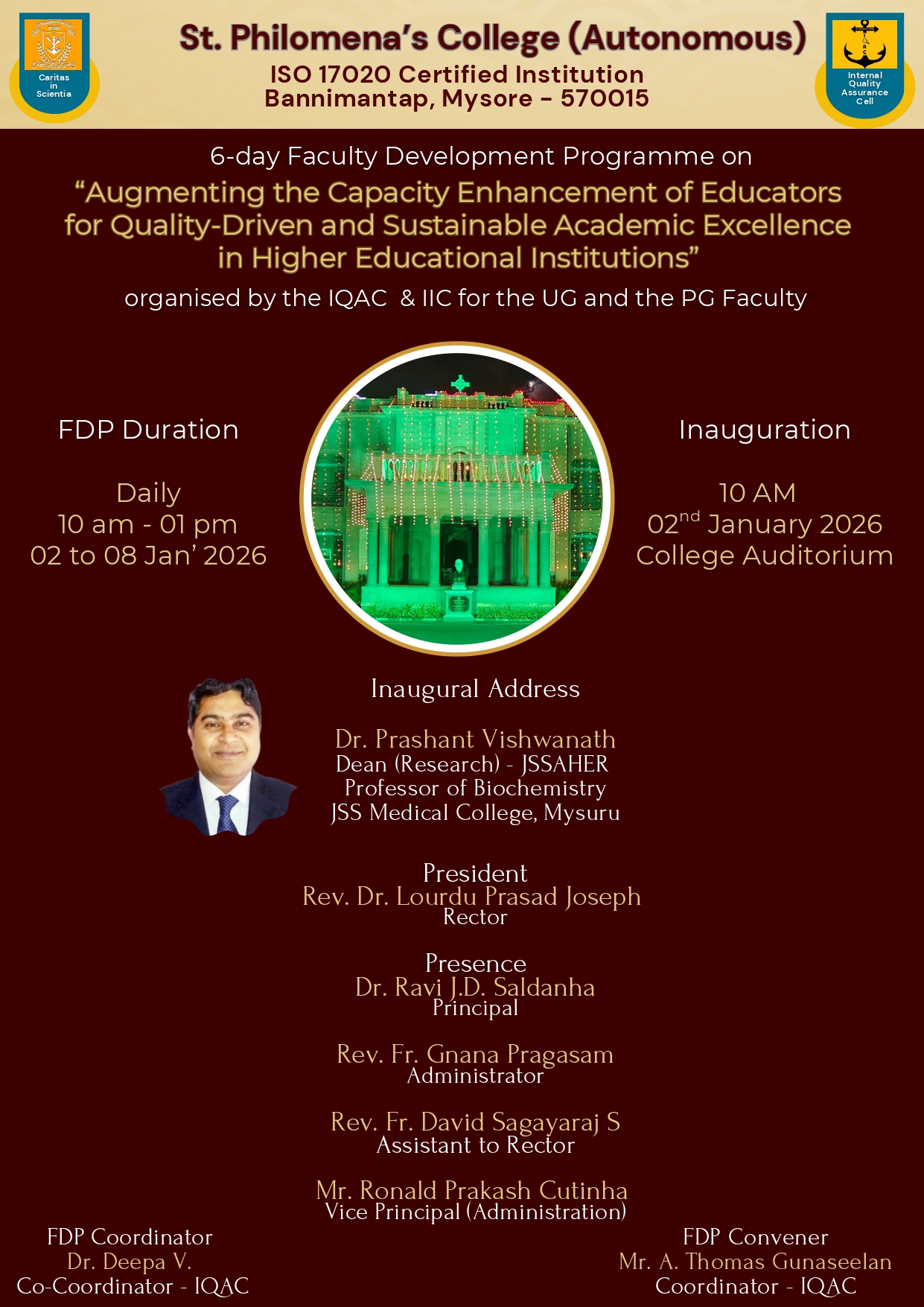
6 days Faculty Development Programme
A REPORT ON THE SIX-DAY FACULTY DEVELOPMENT PROGRAMME (FDP) ON
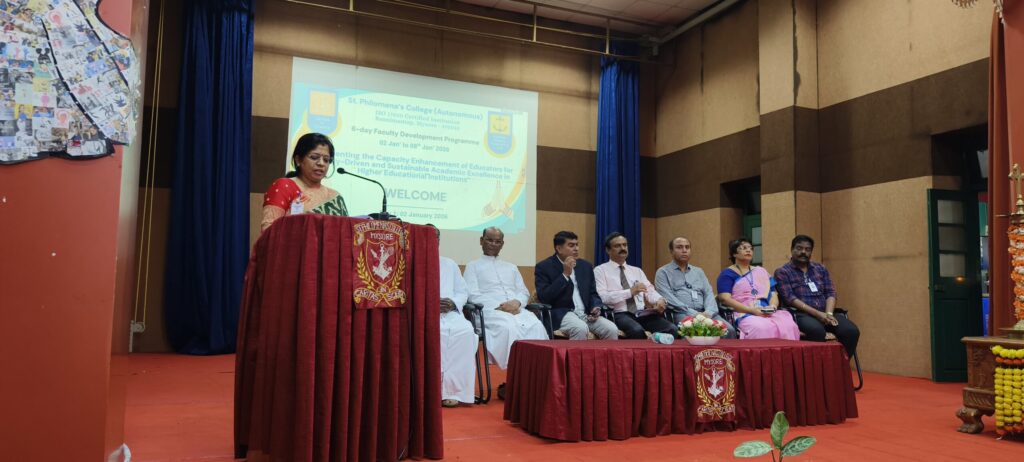
“Augmenting the Capacity Enhancement of Educators for Quality-Driven and Sustainable Academic Excellence in Higher Educational Institutions”
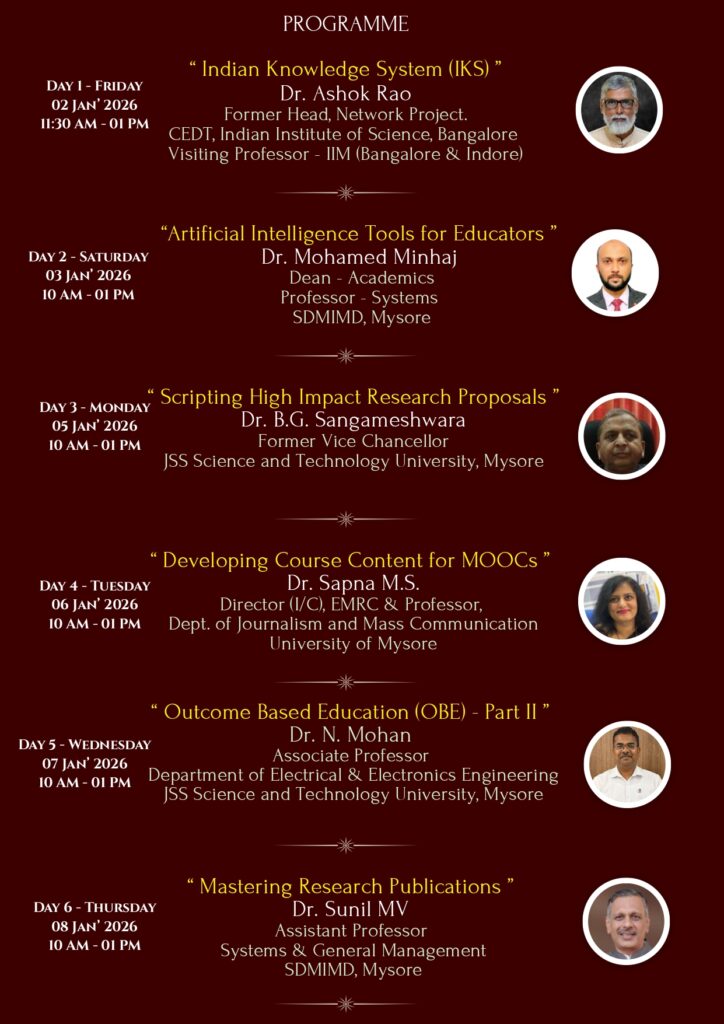
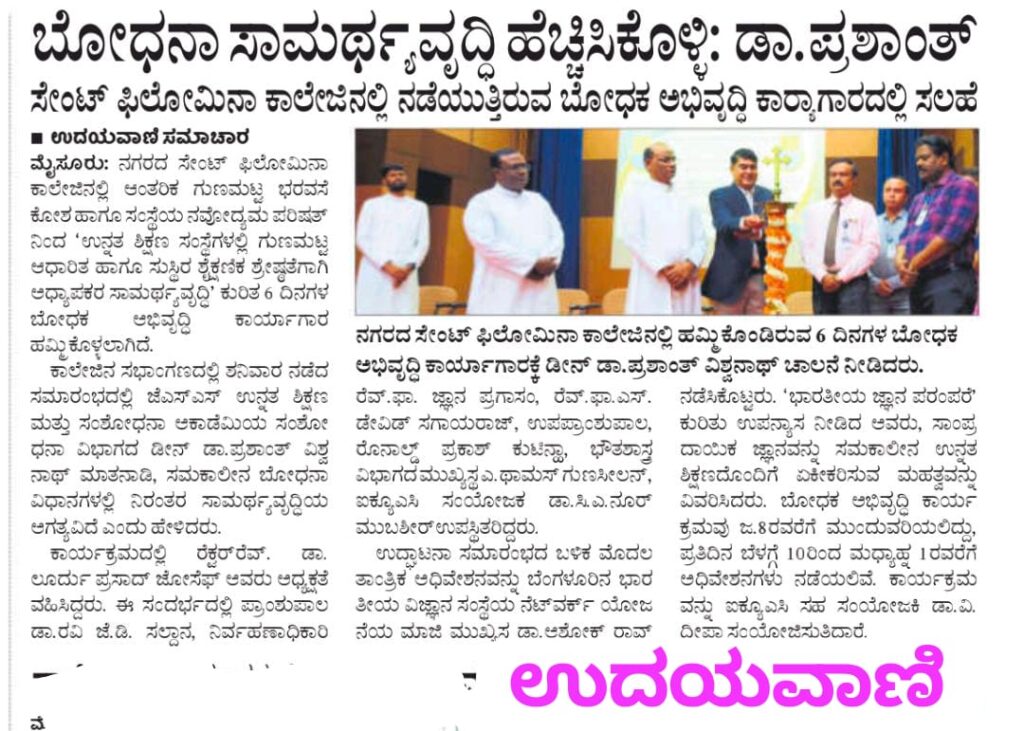
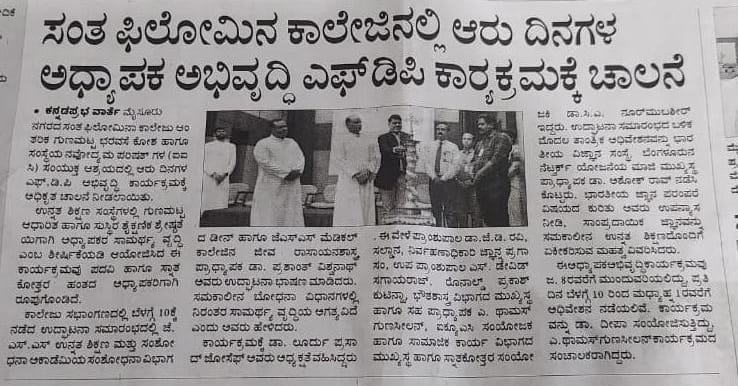
This report is submitted to present the details of the six – day FDP programme organized by the IQAC – Internal Quality Assurance Cell in association with the Institution’s Innovation Council (IIC), from 02nd January – 08th January -2026, was held in our college Auditorium.
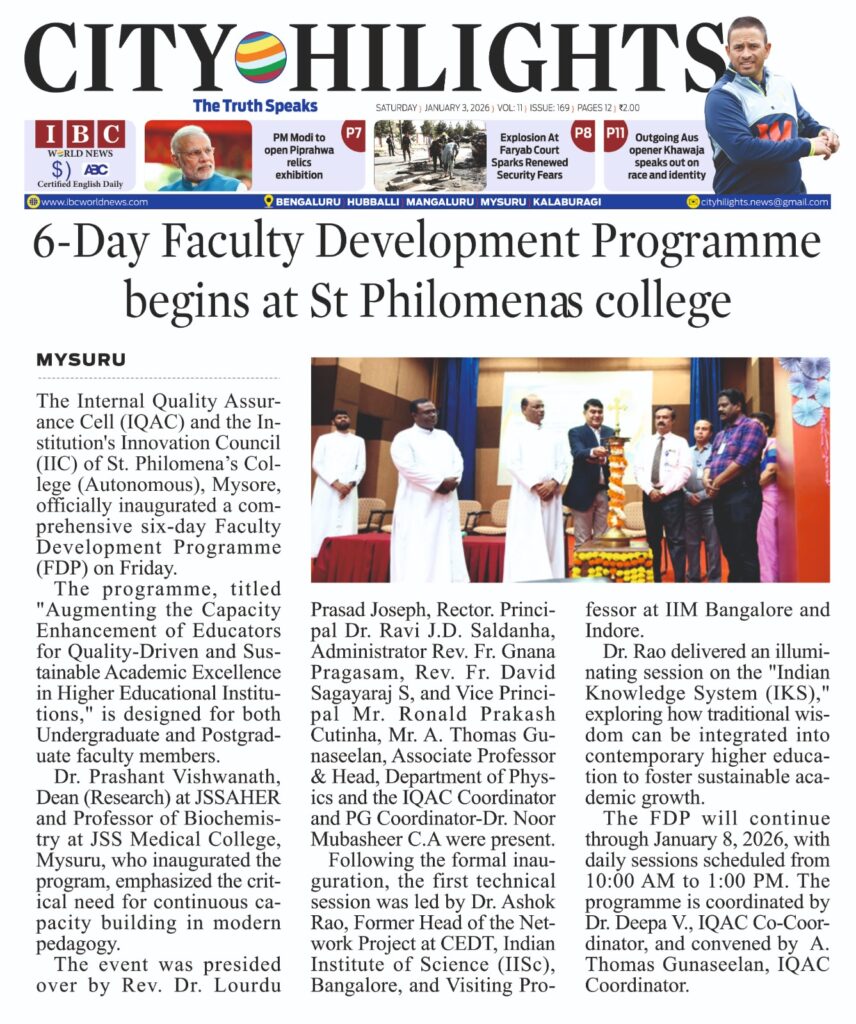
Programme Overview This 6-Day Faculty Development Programme (FDP) is designed to empower educators with multidisciplinary skills essential for higher education in the contemporary academic landscape. The theme “Media Education in the Age of Artificial Intelligence” integrates Media Literacy (ML) and Educational Technology (EdTech), emphasizing ethical, inclusive, and innovative approaches to teaching, learning, and research. The programme explores emerging trends, societal responsibilities and technological advancements.
All the Research Scholars and academicians from different departments of the Undergraduate and Postgraduate programmes, MBA & MCA Department of St. Philomena’s College (Autonomous), Mysoreattended the FDP programme.
Upon successful completion of this FDP, participants will be able to:
- UPDATE TEACHERS ABOUT EDUCATION (NEP)
- MEDIA EDUCATION – EDTECH INTEGRATION
- INCLUSIVE & UNIVERSAL EDUCATION TECHNOLOGY
- DIGITAL PEDAGOGY IN HIGHER EDUCATION
- ENHANCE LEADERSHIP AND MENTORSHIP
- FOSTER COLLABORATIVE NETWORKING
- Enhancing the Pedagogical Techniques, Technological Literacy, and Research Skills
- Improved teaching methodologies and assessment practices
- Competency in applying AI strategies from an experiential and ethical perspective
- Enhance soft skills, communication, and professional growth
- Creation of innovative educational practices and solutions.
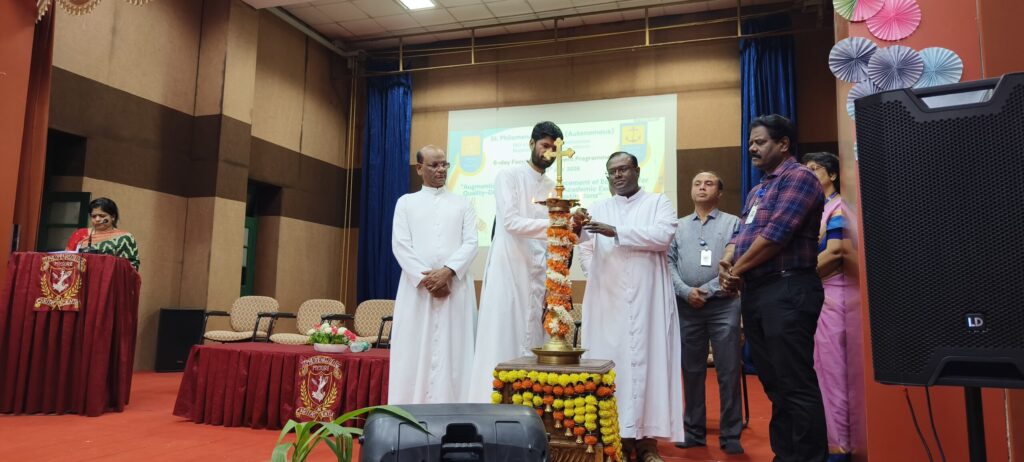
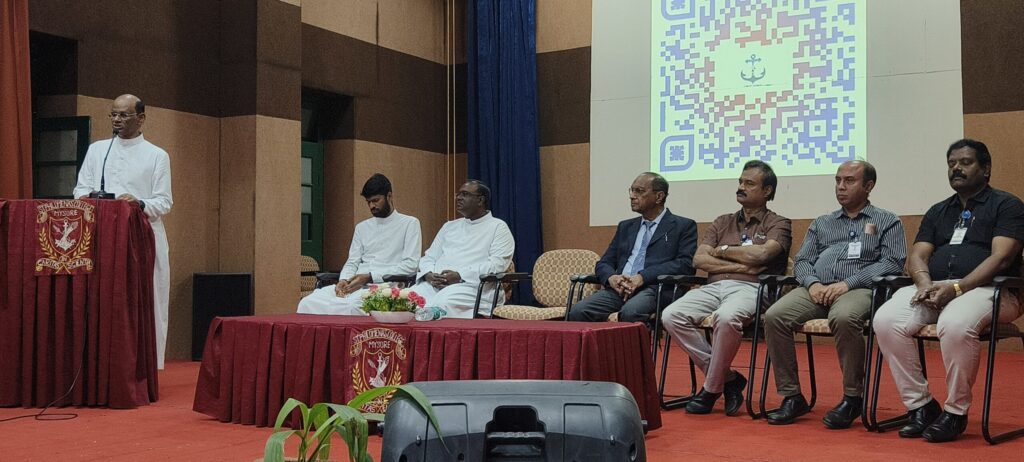
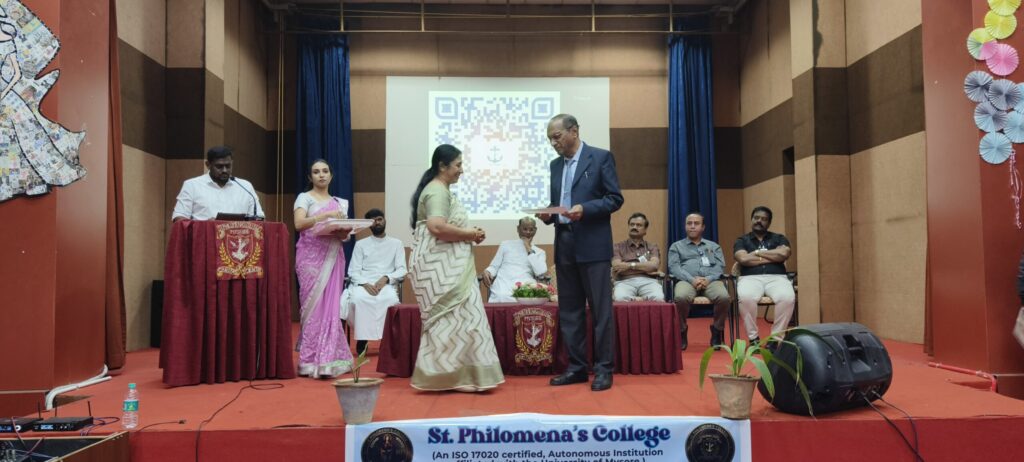
The Faculty Development Programme (FDP) commenced with an inaugural session organized by the Internal Quality Assurance Cell (IQAC), in association with the Institution’s Innovation Council (IIC), was conducted at the college auditorium.
Invocation – Philos Anthem
The inaugural ceremony commenced at 10.00 AM with the Philos Anthem, invoking the spirit, values, and rich academic heritage of the institution. All dignitaries, faculty members, and participants stood in reverence during the anthem, setting a solemn and purposeful tone for the programme.
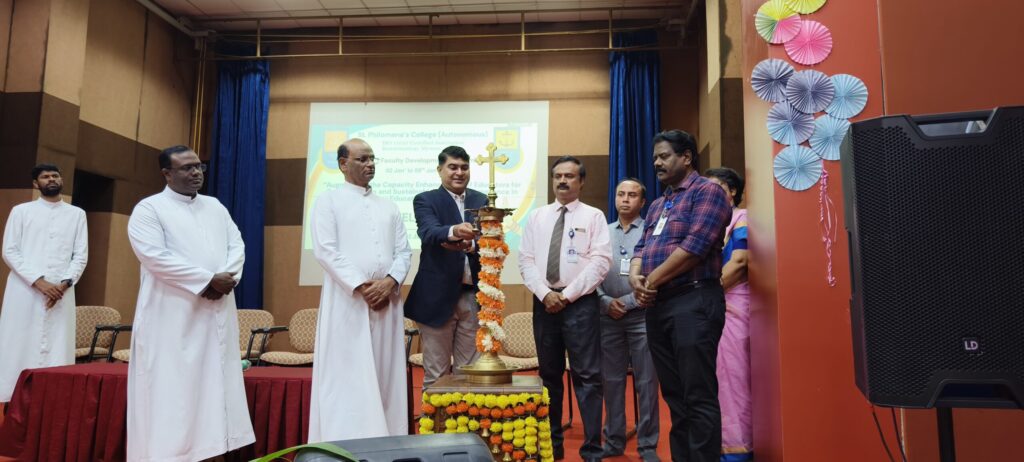
Lighting of the Lamp
Following the anthem, the Lighting of the Lamp was led by, Dr. Prashant Vishwanath – Dean (Research), JSSAHER & Professor of Biochemistry, JSS Medical College, Mysuru, conducted to mark the auspicious beginning of the Faculty Development Programme. The ceremonial lamp, symbolizing knowledge, wisdom, and enlightenment, was lit by the esteemed dignitaries present on the dais, invoking divine blessings for the success of the programme. Led by Ms. Harshitha M. from the Department of BCA.
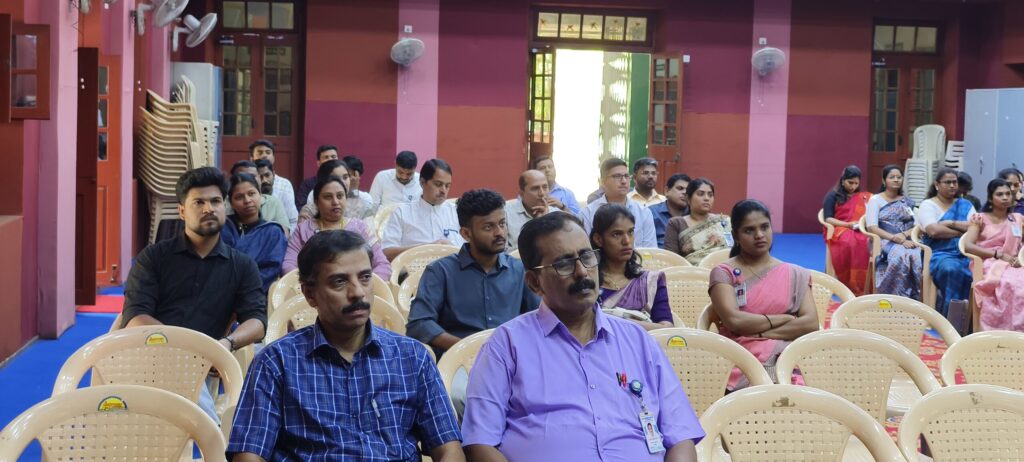
Welcome Address and FDP Briefing
The Welcome Address and Programme Briefing was delivered by the Principal, Dr. Ravi J. D. Saldanha. In his address, the principal warmly welcomed all dignitaries, resource persons, faculty members, and participants. He highlighted the relevance of faculty development in the present higher education scenario, emphasizing the need for continuous professional growth, adaptability, innovation, and quality assurance in teaching and research. He also provided an overview of the six-day FDP and its academic objectives.
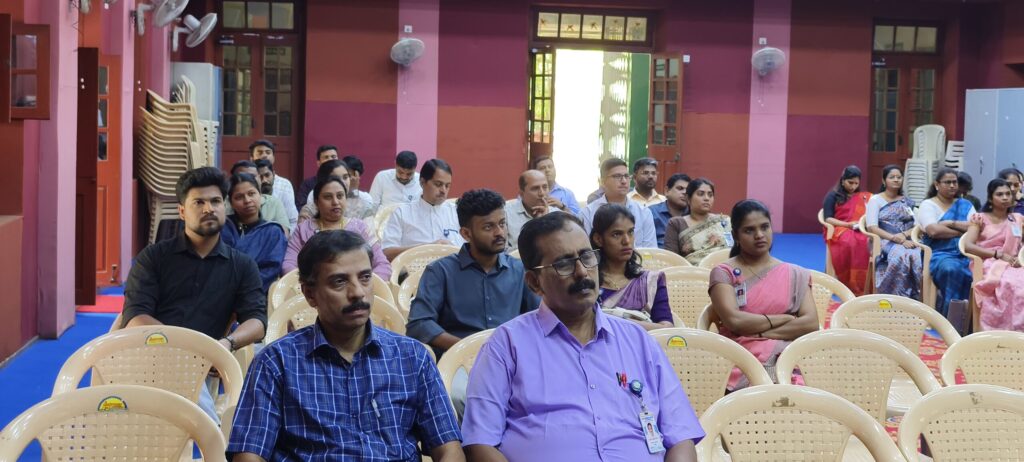
Rector’s Message
The Rector’s Message was delivered by Rev. Dr. Lourdu Prasad Joseph, Rector, who also presided over the inaugural session. In his inspiring message, the Rector underscored the importance of academic renewal, ethical teaching practices, and the role of educators in shaping responsible and competent citizens. He appreciated the efforts of the IQAC in organizing the FDP and encouraged faculty members to actively engage in lifelong learning and innovation for institutional excellence.
Rev.Fr. Gnana Pragasam, Campus Administrator, Rev.Fr. David Sagayaraj S, Assistant to the Rector, Dr. Ravi J D Saldanha. Principal, Mr. Ronald Prakash Cutinah, Vice Principal (Administration), Mr. A. Thomas Gunaseelan, Coordinator, IQAC, Dr. Noor Mubasheer C.A, PG Coordinator, Faculty members from UG, PG, MBA & MCA were also presented at the event.
Dr. Deepa V, Co-coordinator, IQAC, Assistant Professor, Department of BBA, had played the role of Master of ceremony.
The Vote of Thanks was proposed by Mr. A. Thomas Gunaseelan, IQAC Coordinator and FDP Convener. In his address, he expressed heartfelt gratitude to the management, Rector, Principal, dignitaries, resource persons, organizing committee members, and faculty participants for their support and cooperation. He acknowledged the collective efforts that contributed to the successful inauguration of the FDP and reaffirmed IQAC’s commitment to continuous quality enhancement in higher education.

Following the formal inauguration, the session proceeded with the Introduction of the Resource Person by Ms. Priyanka Olivera, Department of BBA, marking the academic commencement of the Faculty Development Programme.

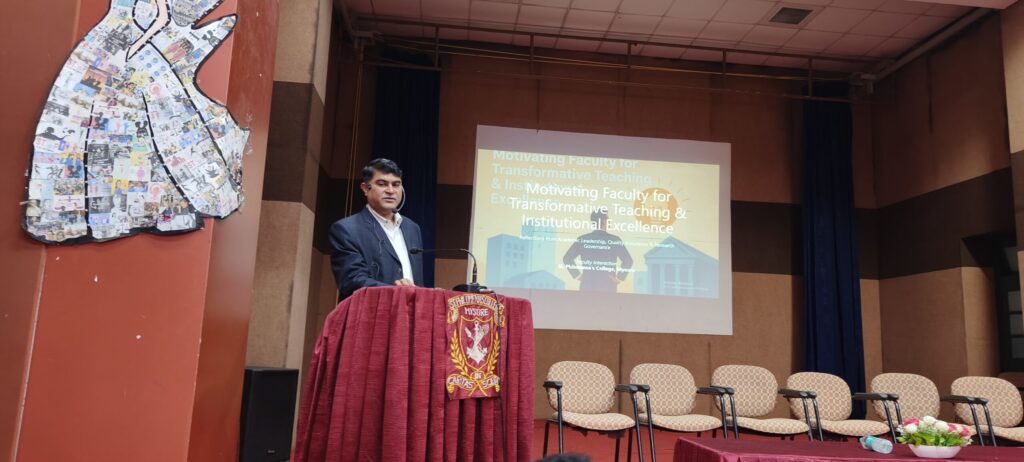
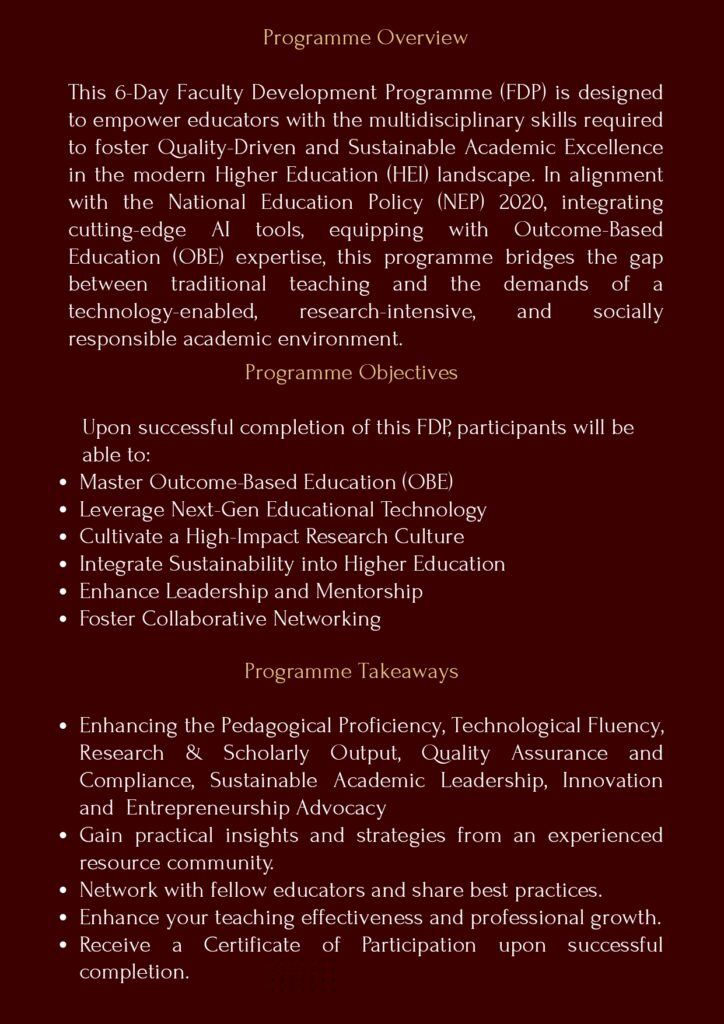
DAY 1 – 02.01.2026
SESSION: 1
Time: 10:00 AM to 11:30 AM
RESOURCE PERSON: Dr. Prashant Vishwanath,
Dean (Research), JSSAHER & Professor of Biochemistry, JSS Medical College, Mysuru.
TOPIC: “Emphasized the critical need for continuous capacity building in modern pedagogy”
Salient features: Dr. Prashant emphasized that higher education is undergoing rapid and continuous transformation. He highlighted that today’s academic environment is shaped by several major factors such as: Implementation of the National Education Policy (NEP)
- Growing importance of accreditation, rankings, and global benchmarks
- Changing expectations of learners
- Increased academic, research, and administrative expectations from faculty
- The need to sustain faculty motivation and professional growth
In his session, He stressed that in such a dynamic environment, continuous capacity building is no longer optional but essential for faculty members.
Key Areas Discussed in the Session
1. Faculty Motivation
He explained that motivated faculty members play a crucial role in: Designing meaningful learning experiences, enhancing student engagement, improving institutional quality and reputation and also discussed factors that demotivate faculty, such as work pressure, lack of recognition, and limited opportunities for growth, and emphasized the need for institutional support systems.
2. Faculty as Designers of Learning
The session highlighted that modern educators are not just content deliverers but designers of learning who: Create learner-centric classrooms, integrate innovation and technology, Encourage critical thinking and creativity
3. Role of Faculty in Institutional Excellence- underlined that:Institutional excellence begins with academically empowered facultyStrong research culture and scholarship depend on faculty initiativeQuality teaching and impactful research are interconnectedSimple Motivation Framework -The 4C’s
As a practical takeaway, Dr. Prashant introduced a simple and effective motivation framework for faculty development, known as the 4C’s:
Clarity: Clear understanding of roles, goals, and expectations
Capability: Continuous skill development and academic competence
Community: Sense of belonging and teamwork within the institution
Collaboration and Contribution: Working together and contributing meaningfully to institutional growth
Key Thought Shared and concluded the session with a powerful reflection:
“Institutions do not transform first; faculty transform, and institutions follow.”
He further stated that:
“The future of St. Philomena’s College will be shaped not only by its infrastructure, but by the passion and purpose of its faculty.”
DAY 1 – 02.01.2026
SESSION: 2
Time: 11:30 AM to 1:00 PM
RESOURCE PERSON: Dr. ASHOK RAO,
FORMER HEAD, NETWORK PROJECT, CEDT, INDIAN INSTITUTE OF SCIENCE, BANGALORE VISITING PROFESSOR- IIM (BANGALORE & INDORE)
TOPIC – “INDIAN KNOWLEDGE SYSTEM (IKS)’
Salient features: Dr. Ashok Rao is a noted academician and thinker with deep engagement in the study of Indian Knowledge Systems (IKS) and interdisciplinary knowledge traditions.
- His scholarly approach connects traditional knowledge with contemporary academic understanding, offering valuable insights into cultural wisdom, epistemology, and holistic learning.
- Session Overview
- Theme of the Session
- Introduction and Overview of Indian Knowledge Systems (IKS)
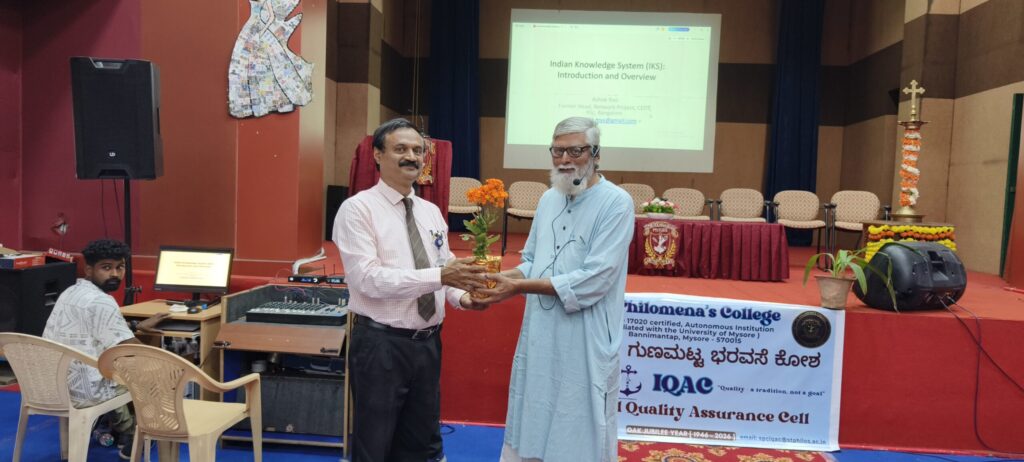
1. Understanding Knowledge Systems
Rao began the session by explaining the concept of Knowledge Systems (KS) in a simple and accessible manner. He described knowledge systems as structured ways through which societies create, preserve, and transmit knowledge across generations.
2. Various Knowledge Systems
He introduced participants to different types of knowledge systems that have evolved across civilizations, including:
- Western Knowledge System
- Arabic Knowledge System
- Indian Knowledge System (IKS)
- Indigenous and Local Knowledge Systems (IDKS)
Each system, he explained, reflects the cultural, social, and philosophical foundations of the society from which it emerged.
3. Values and Impact of Knowledge Systems, he highlighted that knowledge systems shape:
Human values and ethics
- Social behavior and cultural identity
- Scientific thinking and innovation
- Educational and governance structures
He emphasized that knowledge is not value-neutral but deeply connected to societal purpose and worldview.
4. Indian Knowledge System (IKS): Meaning and Scope
Explaining “What is IKS?”, he stated that Indian Knowledge System is a holistic and integrated body of knowledge developed over centuries in India, covering areas such as philosophy, science, medicine, mathematics, ecology, arts, spirituality, and social organization.
He discussed how understanding these components helps educators appreciate the depth and relevance of IKS. The session examined how knowledge systems operate, comparing: Western and Arabic Knowledge Systems, which emphasize analytical and empirical approaches Indian and Indigenous Knowledge Systems (IKS & IDKS), which integrate experiential learning, ethics, sustainability, and harmony with nature This comparison helped participants understand diverse epistemological frameworks.
5. Practical Examples and Insights
With PPT explanation provided practical examples from Indian traditions to explain:
Sustainable living practices, Health and wellness concepts, Community-based knowledge sharing Suggested Reading: As an academic reference, Dr. Rao recommended the book “Sapiens” as a valuable resource to understand the evolution of human knowledge systems and civilization, offering broader context to appreciate the relevance of IKS in the global knowledge landscape. He suggests that Reflections on Happiness and Human Well-Being, towards the conclusion, shared insightful thoughts on happiness and human responsibility, stating that: Happiness is an individual’s personal responsibility True happiness is a state of mind, not dependent on external conditions. The greatest contribution of a human being lies in cultivating inner well-being and meaningful engagement with society.
SESSION: 1 & 2
Time: 10:00 AM to 1:00 PM
RESOURCE PERSON: Dr. Mohamed Minhaj
Dean, Academics, Professor – Systems In-Charge – Campus Systems
Chairperson, Grievance Cell, SDMIMD
TOPIC Artificial Intelligence Tools for Educators: Enhancing Teaching, Assessment & Research.
Salient features: To help faculty understand the practical use of different AI tools in teaching and academic work.
- To guide educators in choosing the right AI tool for research, content creation, presentations, and assessment.
- To introduce simple AI-based tools for topic research, brainstorming, and idea development.
- To familiarize faculty with AI tools that support visual content, presentations, and images. To encourage the ethical and meaningful use of AI to improve teaching quality and academic productivity.
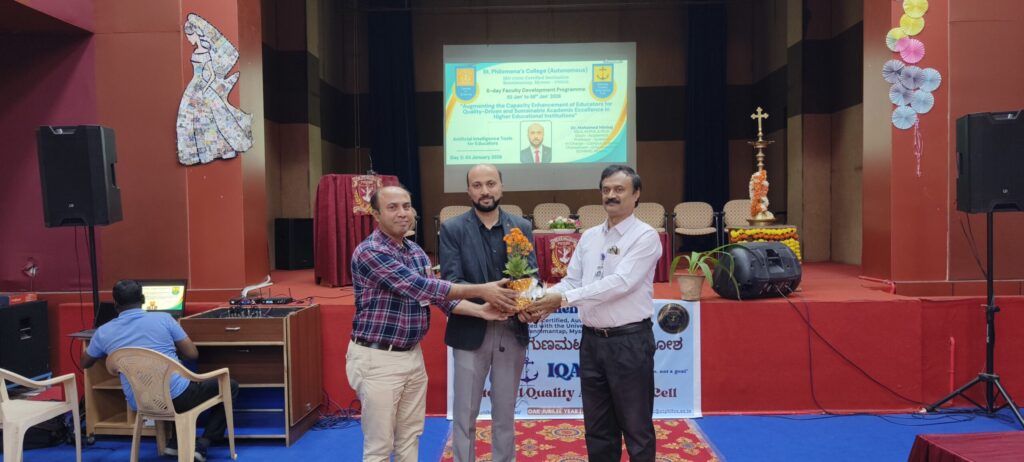
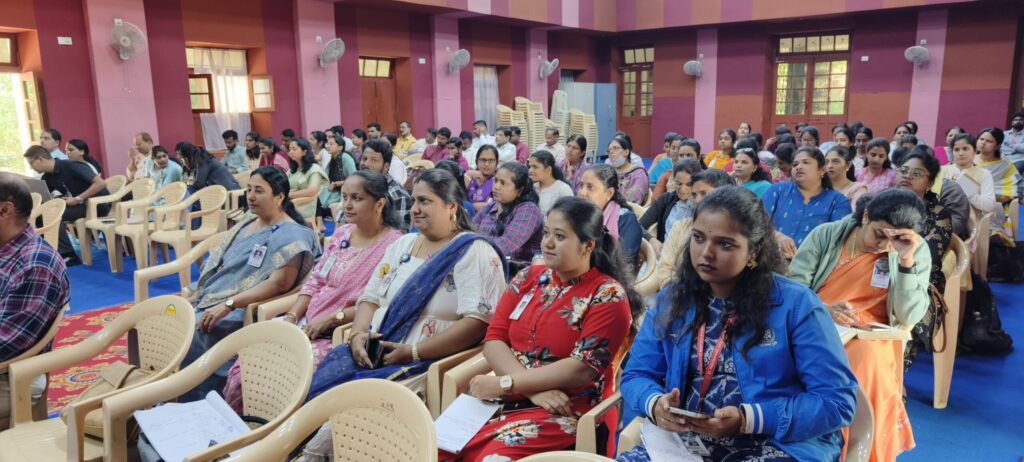
- During the session, various contemporary Artificial Intelligence tools were introduced and discussed with practical academic relevance. The emphasis was on selecting the right tool for the right academic purpose rather than using AI blindly.
- ChatGPT was highlighted as one of the most effective tools for topic-based research, conceptual clarity, content structuring, and academic drafting. It was explained that ChatGPT is particularly useful for understanding complex topics, refining research ideas, framing abstracts, and preparing lecture content.
- Gemini was discussed as a strong alternative, especially useful for multimodal tasks. Gemini was noted for its ability to handle images, documents, and visual-based inputs, making it suitable for content creation that combines text and visuals. The session also briefly touched upon Gemini’s evolving tools such as Nano and Banana, which represent its modern, fast, and lightweight AI models aimed at real-time assistance and image-based tasks.
- For presentation creation, Gamma was introduced as an effective AI-powered PPT tool. It was demonstrated how Gamma helps in generating visually appealing presentations with minimal effort, making it ideal for faculty members who wish to focus more on content rather than design.
- Under the visual thinking tools, Napkin was discussed as a creative aid that helps in converting ideas into visual sketches and concept maps. This tool was presented as particularly useful for brainstorming sessions, planning lectures, and visual storytelling.
- The session also introduced Heuristi.ca, which was explained as a research-oriented tool that supports easy quiz generation, content exploration, and the use of multiple language and multiple content sources, making it highly suitable for interdisciplinary teaching and assessment design.
- Jenni.ai was recommended mainly for brainstorming and research idea development. It was described as a supportive tool for academic writing that assists researchers in refining arguments, structuring papers, and maintaining academic flow, especially during the early stages of research.
- Perplexity AI was highlighted as an efficient search-based content generation tool. Unlike traditional AI chat tools, Perplexity was appreciated for its ability to combine content generation with reliable search results, making it useful for quick fact-finding, reference-based writing, and up-to-date academic information.
DAY 3 – 05.01.2026
SESSION: 1
Time: 10:00 AM to 11:30 AM
RESOURCE PERSON: Dr. B. G. Sangameshwara
Former VC, JSSSTU, FORMER ADVISOR, AICTE, FORMER PRINCIPAL, SJCE, TRANSFORMATIONAL STRATEGIST.
TOPIC -TRANSFORMATIVE IDEATION AND HIGH IMPACT FRAMEWORKS
Salient features: Focus on research methodology, proposal writing, and high-impact academic thinking
- Emphasis on systematic and applied research approaches
- Practical understanding of problem identification and research design
The session conducted by Prof. B. G. Sangameshwara focused on Research Methodology and the architecture of high-impact research proposals. He explained research as a systematic investigation aimed at solving real-world problems through structured planning and analysis.
The discussion covered the difference between basic and applied research, highlighting the importance of identifying research problems by studying existing systems and understanding their limitations. He stressed that clearly defining the problem makes the solution easier and more effective.
The session also emphasized:
- Research Methodology
Research methodology refers to a systematic approach to investigation, which provides a structured plan to design, plan, and conduct research effectively. It involves both basic (theoretical) and applied research approaches.
Basic research focuses on developing theoretical knowledge, while applied research emphasizes the practical application of knowledge to solve real-world problems.
- Problem Identification
Problem identification involves a detailed study of existing systems to understand their structure and functioning. This stage includes identifying the drawbacks, limitations, and challenges present in the current system. Clearly defining the problem helps in developing solutions that can be addressed efficiently and effectively.
Objectives of the Project
The objectives of the project are clearly defined to guide the research process. These objectives focus on applied research and aim at solving practical problems through an experimental approach.
- Research Design
The research design outlines the overall framework of the study. It focuses on practical problem-solving and adopts appropriate experimental methods. The design ensures that the evaluation is based on system performance and measurable outcomes.
- Literature Survey
The literature survey involves a systematic review of existing research papers, studies of similar systems, and relevant technologies. It helps in identifying research gaps and supports the selection of suitable techniques and tools for the study.
- Data Collection
Data collection is carried out using both primary and secondary data sources.
Primary data includes system-generated data and experimental results obtained during the study.
Secondary data consists of information collected from journals, research papers, and online datasets.
Testing and Validation
Testing and validation are conducted to ensure the reliability and accuracy of the system. This includes unit testing, evaluation of system performance, and validation of the obtained results.
DAY 3 – 05.01.2026
SESSION: 2
Time: 11:30 AM to 1:30 PM
RESOURCE PERSON: Mrs. Vedhaprada B. L.
Counselling Psychologist, Founder, LH Powerful Minds, Mysore
TOPIC – WORK LIFE BALANCE AND EDUCATOR ENRICHMENT
Salient features: Interactive session on work–life balance and educator well-being AND
Experiential learning through activities, reflection, and team engagement
Mrs. Vedhaprada B. L, focusing on work–life balance, mental well-being, emotional strength, and self-awareness among educators. The session was highly interactive, reflective, and activity, oriented, encouraging participants to understand stress, emotions, and personal responsibility for happiness.
Key Reflections and Personal Awareness
Participants were guided to reflect on the most important person in their life “Myself”, emphasizing self-care and self-respect. Simple daily practices and maintaining a healthy lifestyle were highlighted as essential for mental balance.
The importance of patience and emotional control was strongly emphasized. Understanding Anger and Emotional Reactions. Anger was discussed with reference to common reactions such as: Shouting, Beating, Crying, Destroying things
Participants were advised to pause in that moment and stop taking things personally. Effective anger management skills were explained, including:
- Walk away when angry
- Do not talk immediately
- Punch a pillow if needed
- Think of the end result before reacting
- Core Life Principles Shared
The following key principles LIGHT:
LIGHT
LET GO
INTROSPECT INWARD
GIVES
HAPPINESS
TRANSPARENT
- A simple yet powerful demonstration was conducted using a coke bottle and a water bottle. By shaking the bottles, the resource person explained how stress builds up inside the mind. Just like a shaken bottle bursts when opened immediately, stress can explode when not managed properly. Allowing the bottle to settle symbolized the importance of pausing and calming the mind before reacting.
- Another activity involved muddy water in a tumbler. Continuous pouring of clean water into the tumbler gradually cleared the mud, symbolizing how consistent positive thoughts, patience, and healthy habits help clear mental stress over time.
- These demonstrations visually conveyed the concepts of stress, balance, and emotional regulation in a simple and effective manner.
Self-Reflection and Personal Values
Participants were encouraged to describe themselves using five words. The commonly shared qualities included: Self-motivation, Hard worker, Confident, Patience
Ability to face both good and bad Positive affirmations and values such as family, thank you, sorry, welcome, happy, and taking care were highlighted as essential elements of emotional intelligence.
Team-Building and Engagement Activities were conducted to promote positivity and mutual appreciation:
- Participants shared one great achievement in their life with each other, fostering confidence and self-worth.
- A balloon activity was conducted where participants blue balloons and collected them within a fixed time, encouraging teamwork, coordination, joy, and active participation.
These activities helped relieve stress, build trust among participants, and create a lively and supportive learning environment.
Vision Board and Gratitude Practice
The concept of a Mission Board was introduced, focusing on gratitude and purpose in life. Participants reflected on being: Thankful, Alive, Living life with their own effort
Family (husband and son), Work blessed, good people
The session concluded with a strong message that happiness is a personal responsibility, and true mental balance comes from self-awareness, gratitude, patience, and consistent positive effort.

DAY 4 – 06.01.2026
SESSION: 1 & 2
Time: 10:00 AM to 1:30 PM
RESOURCE PERSON: Dr. Sapna M. S.
Director (I/C), EMRC, Professor, Department of Journalism and Mass Communication, University of Mysore
TOPIC – SWAYAM / MOOCs: Exploring Government Platforms to Enhance Teaching
And developing course content for moocs- hands on practice and tools.
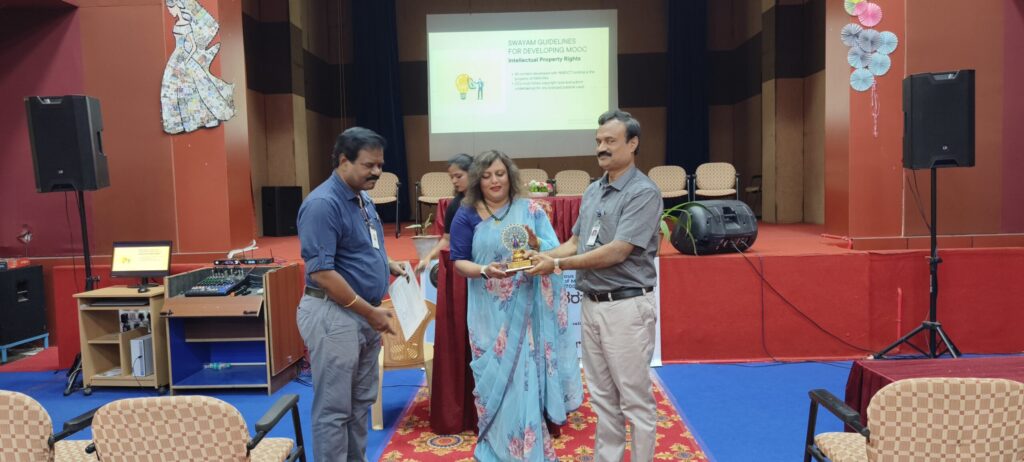
- Salient features: Focus on SWAYAM and MOOC platforms for enhancing teaching, learning processes
- Orientation on Government-supported online learning platforms
- Practical insights into developing course content for MOOCs
- Hands-on training using MOOC development tools
- Guidance on structuring video lectures, quizzes, and assignments
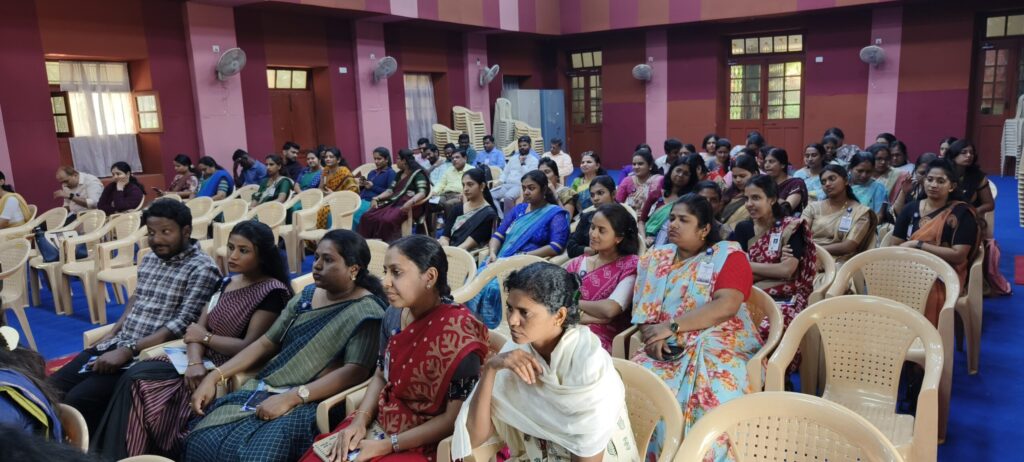
- A session on “Online Content and MOOCs (Massive Open Online Courses)” was conducted with the objective of creating awareness about online learning platforms, their significance in higher education, and the process involved in developing MOOC courses. The session highlighted the role of MOOCs at EMRC– Education Multimedia Research Center in promoting educational development through internet-based learning, particularly under government and UGC initiatives.
- The resource person explained that MOOCs are an easier and accessible mode of learning, offering a wide range of subjects nearly 900 subjects to learners across disciplines. Emphasis was laid on government supported platforms such as SWAYAM, along with global platforms like Coursera, edX, Udemy, and Future Learn, which provide quality educational content, often free of cost.
- The importance of MOOCs was discussed in detail, focusing on key aspects such as accessibility, flexibility, skill development, affordable learning, lifelong learning, and career advancement. The session underlined how MOOCs help learners upgrade skills and remain competitive in a rapidly changing academic and professional environment.
- The MOOC learning process was explained clearly, starting from enrolment, followed by course selection based on learner interests, career goals, or academic needs. The learning process includes video lectures, reading materials, quizzes, and assignments, making the courses interactive and learner-centric.
- The latter part of the session focused on how to develop MOOC courses. The resource person outlined the need to identify course objectives and target audience, followed by developing high-quality video lectures. The course development process was explained step by step, involving course coordinators, virtual coordinators, content creation teams, and adherence to quality standards.
- Roles and responsibilities such as Course Coordinators (CCs) and Subject Matter Experts (SMEs) were discussed, along with note on content creation, approval, course delivery, and re-running of courses to ensure sustainability and wider outreach.
- The session was informative and insightful, providing participants with a comprehensive understanding of MOOCs, their relevance in higher education, and the structured approach required for developing quality online courses.

DAY 5 – 07.01.2026
SESSION: 1 & 2
Time: 10:00 AM to 1:30 PM
RESOURCE PERSON: Dr. Mohan N
B.E, MTech, PhD, Department of EEE, SJCE, JSSSTU, Mysore
TOPIC – Outcome Based Education (OBE): Concept, Curriculum Mapping & Learning Outcomes
And OBE Execution – CO-PO-PSO Mapping, Rubrics & Attainment Calculation
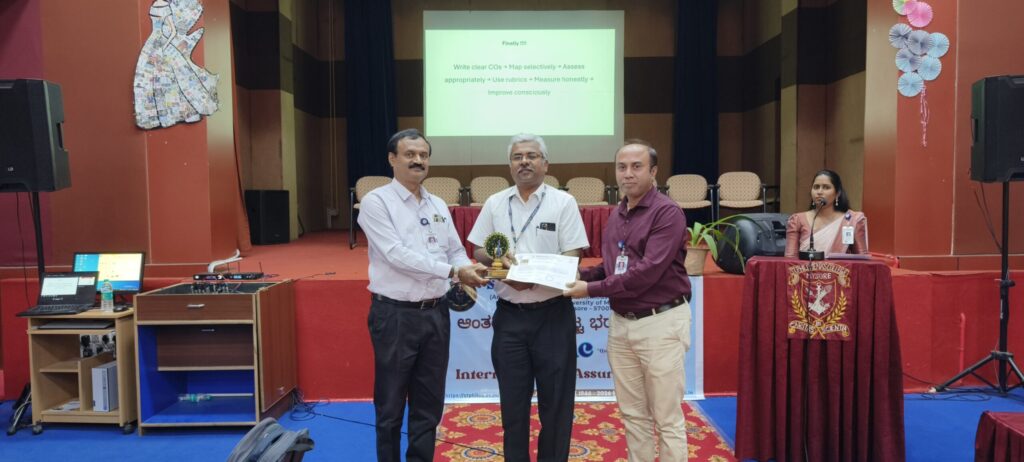
Dr. Mohan initiated the session with a reflective questionnaire (rating scale 1 to 5) that encouraged participants to assess their current confidence and understanding of Course Outcomes (COs) and Program Outcomes (POs). This interactive warm-up served as a foundation for deeper discussions around core OBE principles.
He traced the educational transition from a Teaching Era to a Learning Outcomes Era, quoting Einstein’s famous line, “If you judge a fish by its ability to climb a tree, it will live its whole life believing that it is stupid. “This statement highlighted the essence of OBE understanding and nurturing diverse student abilities rather than imposing a uniform measurement of success.
Key Concepts and Terms Explored: OBE-related terminologies, frameworks, and methodologies, including: Cos, POs, PSOs, PEOs – Course Outcomes, Program Outcomes, Program Specific Outcomes, and Program Educational Objectives, BTL (Bloom’s Taxonomy Levels) Levels of learning from remembering to creating, OBTL- Outcome-Based Teaching and Learning, OBC, OBCT, OBA- Outcome-Based Curriculum, Curriculum Transaction, and Assessment, NBA & SAR- National Board of Accreditation and Self-Assessment Report, Rubrics -Tools for performance evaluation using clearly defined criteria.
He explained how each outcome is not just a statement, but a measurable goal designed to ensure students acquire skills, knowledge, and values expected at the end of a course or program.
From Traditional Teaching to Outcome-Based Education:
Dr. Mohan provided a comparative perspective between traditional teaching practices and OBE. He emphasized that the teacher’s role is now shifting from mere content delivery to being facilitators of active learning, engagement, and reflective thinking.
Other key dimensions covered included:
- Stakeholder Involvement =Feedback from industry, alumni, parents, and students is vital for effective program design.
- OBE Assessment Techniques = Use of rubrics, blue tags, and structured evaluation mechanisms to assess intended learning outcomes.
- Seminar-based OBE implementation =Incorporating discussions, project-based learning, and evaluations linked with CO-PO mapping.
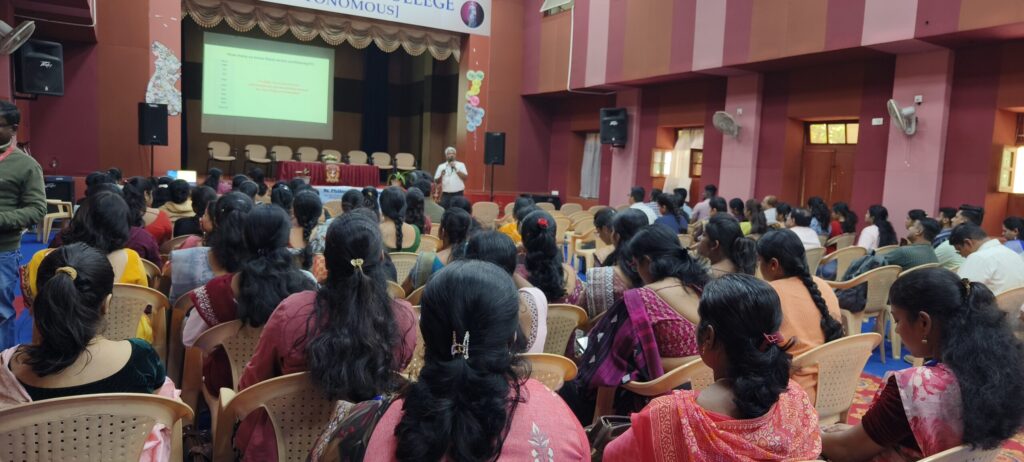
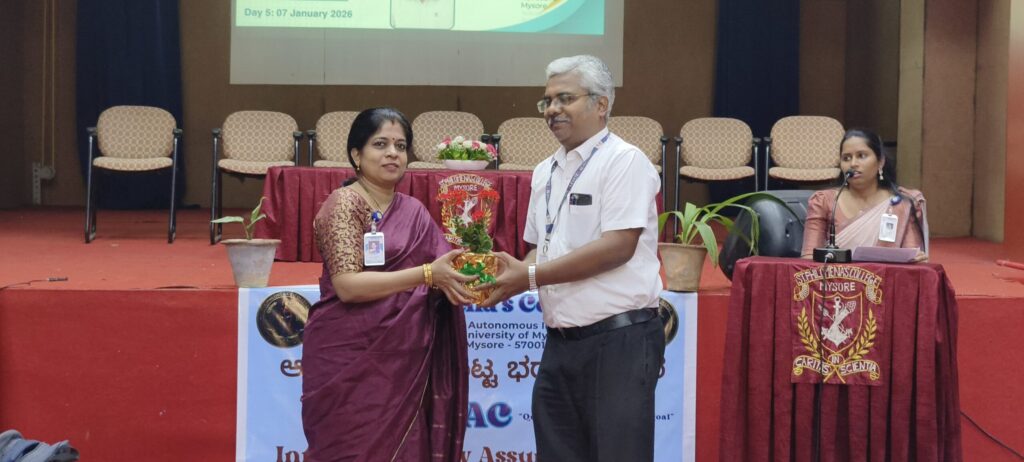
DAY 6 – 08.01.2026
SESSION: 1 & 2
Time: 10:00 AM to 1:30 PM
RESOURCE PERSON: Dr. R. Jagadeesh
B.E, MTech, PhD, Department of EEE, SJCE, JSSSTU, Mysore
TOPIC – Research Publications: Strategic Journal Selection & Navigating the “Quality” Maze And
From Data to Global Dissemination
Salient features: emphasis on Life Long Learning (LLL) and research-oriented mindset
- Focus on quality in research publications and journal selection
- Clear distinction between research papers and research proposals
- Step-by-step explanation of the research process from ideation to conclusion
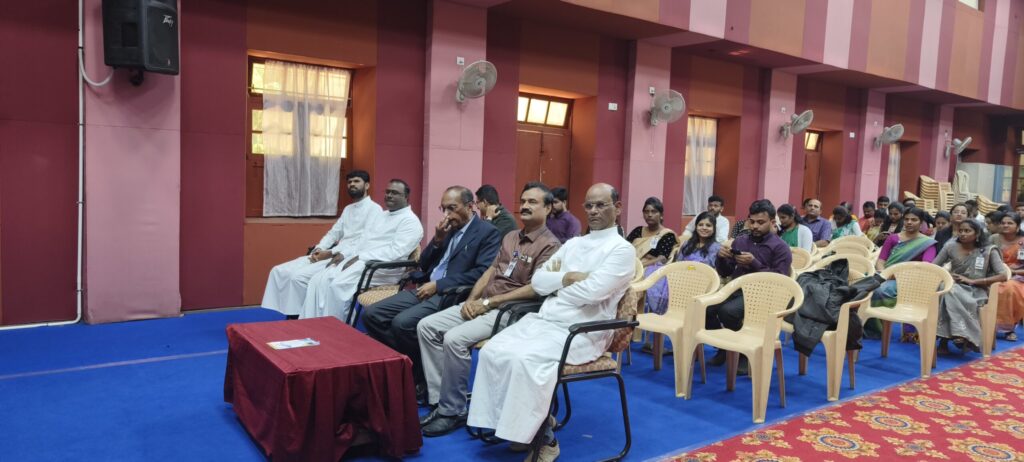
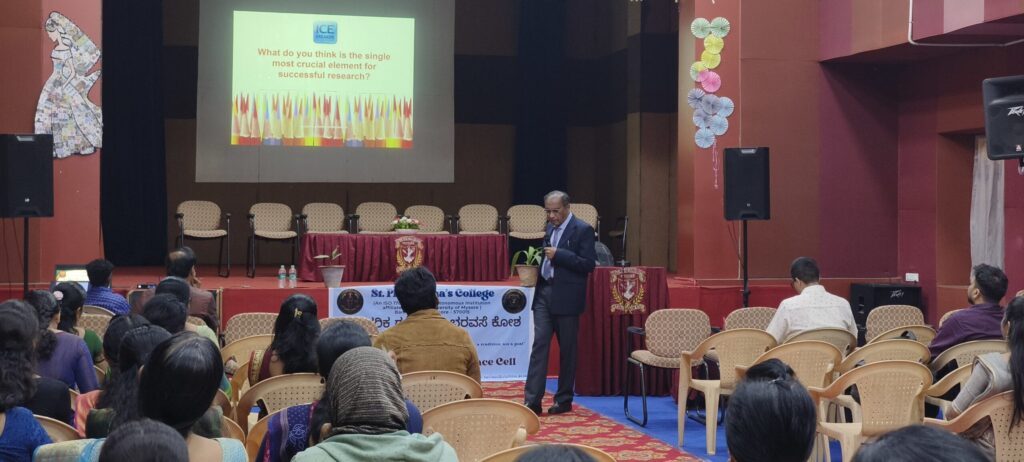
A highly engaging and thought-provoking session on Research Publications and Quality in Research was conducted by Dr. R. Jagadeesh, focusing on building a strong research culture among faculty members and researchers. The session began with an emphasis on Life Long Learning (LLL) and the importance of nurturing a positive research mindset and supportive academic environment.
Dr. Jagadeesh highlighted that passion and curiosity are the foundation of meaningful research. He explained how selecting the right journal and understanding quality parameters play a crucial role in successful research publications. The session helped participants understand how to navigate the challenges of journal selection while maintaining ethical and academic standards.
The resource person clearly explained the difference between a research paper and a research proposal. While research papers aim at publishing original findings in journals, research proposals are prepared to seek grants and funding. He introduced a simple and practical research framework Conceive, Choose, Compile, Critique, Corroborate, Convince, and Conclude to help participants understand the complete research journey with a continuous focus on quality.
Participants were guided on how to identify research problems, including finding new solutions to existing problems, exploring new and emerging areas, and selecting relevant contemporary topics also shared valuable insights on what makes a good research problem, such as originality, incremental contribution, challenging established ideas, and creating social value.
The session further encouraged researchers to explore interdisciplinary and cross-application approaches to widen the scope and impact of their work. The importance of clearly proposing, illustrating, and convincingly presenting research ideas was stressed throughout the discussion.
The session concluded with a detailed explanation of the standard structure of a research paper, covering all key sections from title and abstract to methodology, findings, discussion, conclusion, and references. This helped participants gain clarity on organizing and presenting their research effectively.
Overall, the session was highly informative and motivating. It provided practical guidance, boosted research confidence among participants, and inspired them to pursue quality research with clarity, purpose, and passion.

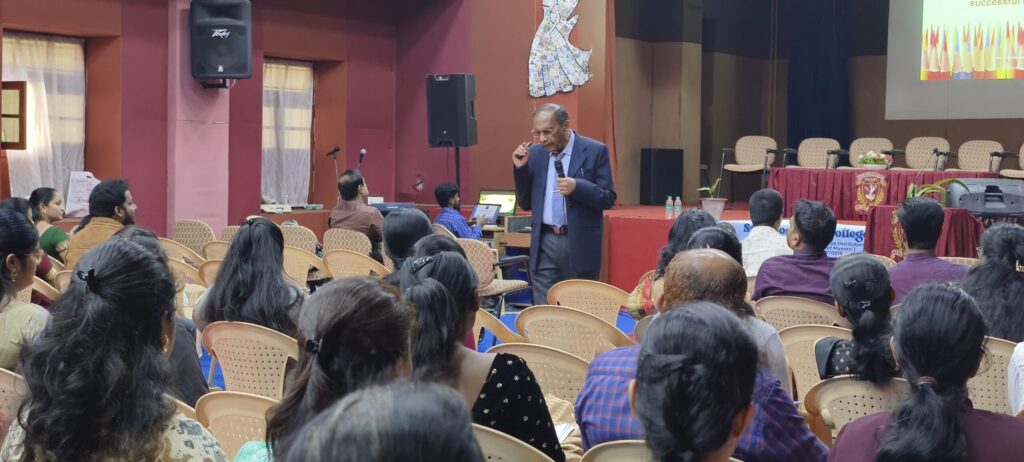
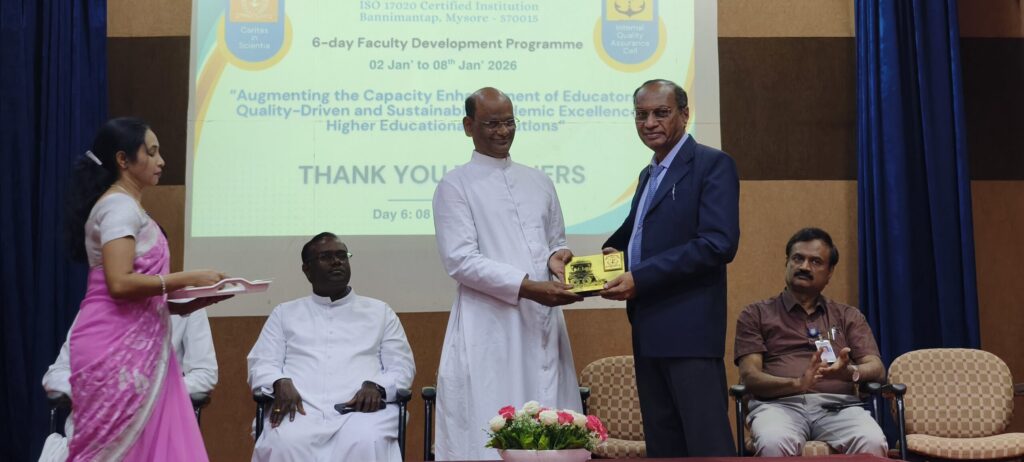
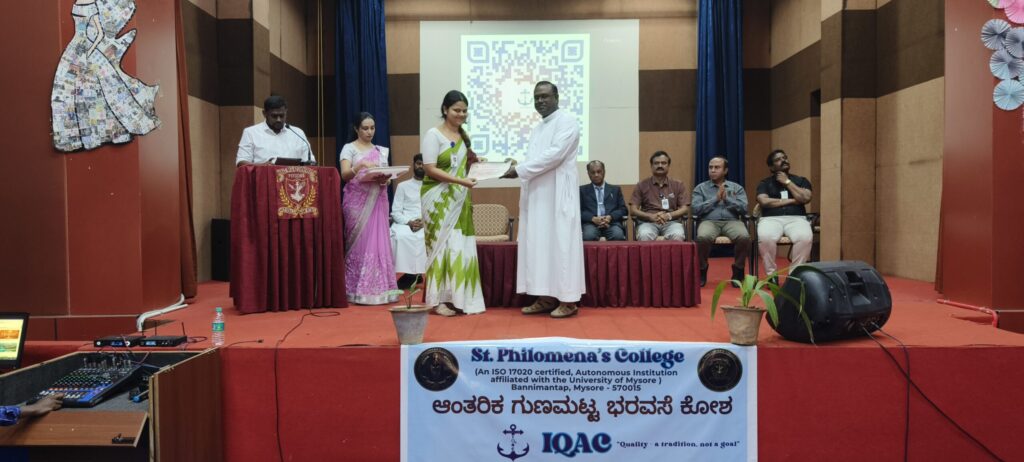
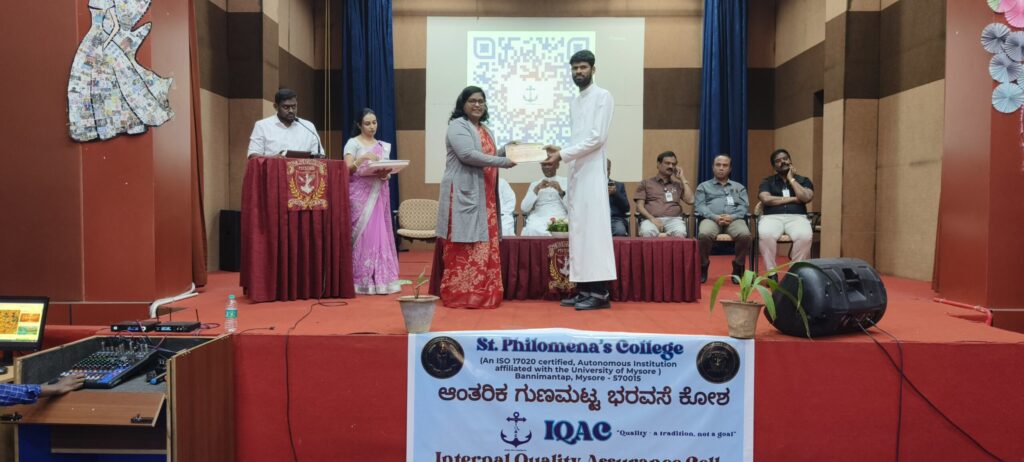
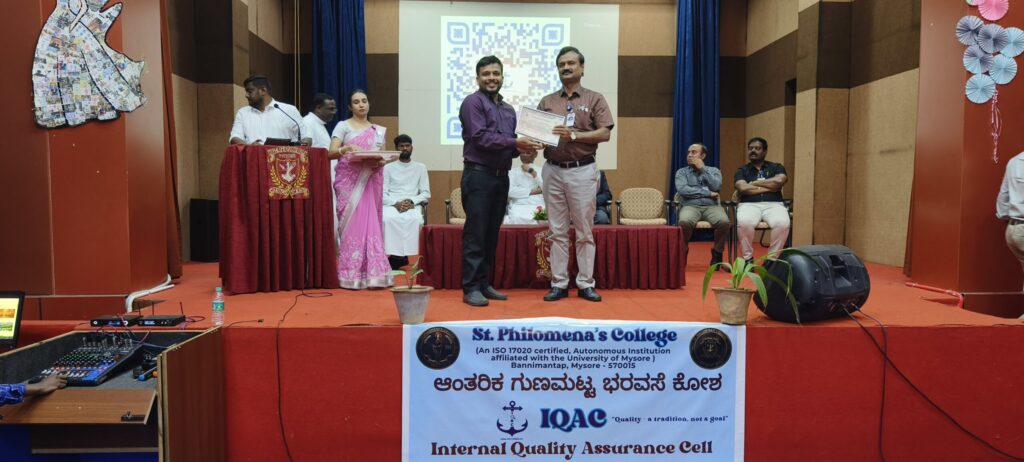
The FDP was concluded with valedictory function on 08.01.2026, In the Valedictory session, Rev. Dr. Lourdu Prasad Joseph, Rector, and Rev.Fr. Gnanapragasam, Administrator, Rev.Fr. David Sagayaraj S, Assistant to Rector, Dr. Ravi J D Saldanha. Principal, Mr. Ronald Prakash Cutinha, Vice Principal (Administration), Mr. A. Thomas Gunaseelan, Coordinator, IQAC, Dr. Deepa V, Co-coordinator, IQAC, Assistant Professor, Department of BBA, were present. Mr. William Joseph, Assistant Professor, Head, Department of English, had played the role of Master of ceremony. The valedictory speech was given by Rev. Dr. Lourdu Prasad Joseph, Rector, congratulated the Coordinators and Organizing Committee for successfully conducting FDP, he also appreciated the FDP theme. The vote of thanks was given Prakash Cutinha, Vice Principal (Administration) he highlighted the immense contribution of the Organizing Committee members and experts. Feedback by the participants and all the participants were distributed with the participant certificates on successful completion of SIX-DAY FACULTY DEVELOPMENT PROGRAMME (FDP) ON “Augmenting the Capacity Enhancement of Educators for Quality-Driven and Sustainable Academic Excellence in Higher Educational Institutions”